
On algorithms, mistaken identities and the freedom to become someone else.
Text and editorial direction: Ville Kiiski
Research, writing and fact-checking: ChatGPT
SUNDAY ESSAYS #04 — 15 November 2026
A minor misunderstanding
Has this ever happened to you? For some completely random reason, you’ve ended up watching a video that has absolutely nothing to do with your personality, interests or usual habits. Let’s say a spectacularly idiotic conspiracy theory.
Perhaps you were tired after a long day and your attention drifted for a crucial second. Perhaps the video started automatically after something you were genuinely interested in. Perhaps you actually fell asleep while watching something else and woke up forty minutes later, deep inside a rabbit hole you never intended to enter. Perhaps the video had some deviously irresistible hook that caught you in a moment of hesitation or weakness. Or perhaps you were watching out of professional curiosity, or simply because somebody had made such a spectacularly ridiculous claim that you wanted to understand what on earth was going on.
In any case, they got you. Aarghhh.
The recommendation system, however, has no direct access to your intentions. Nor does it particularly need to. It has data about your behaviour. Depending on the platform, that may include the fact that you spent a considerable amount of time with the video. It might interpret this as evidence of interest.
By the following morning, your feed has begun to change. There are mysterious aircraft, secret governments, suspicious pharmaceutical companies and unusually confident gentlemen explaining how the world actually works. Before long, you find yourself surrounded by people who have discovered the truth about absolutely everything.
You are not particularly interested in conspiracy theories. You are now interested in finding out how to make them disappear.
This turns out to be surprisingly difficult.
An old medical joke claims that influenza lasts fourteen days without treatment, and two weeks with it. Getting rid of an algorithm’s mistaken impression of your interests can sometimes feel rather similar.
The algorithm, unfortunately, may not recover so quickly.
I have heard variations of this experience repeatedly in conversations with people about social media. Someone watches an unusual video, searches for something outside their normal interests or briefly becomes fascinated by a subject they would rather not encounter again. The recommendation system apparently draws its conclusions, and the person’s digital environment begins to reflect an identity they do not recognise as their own.
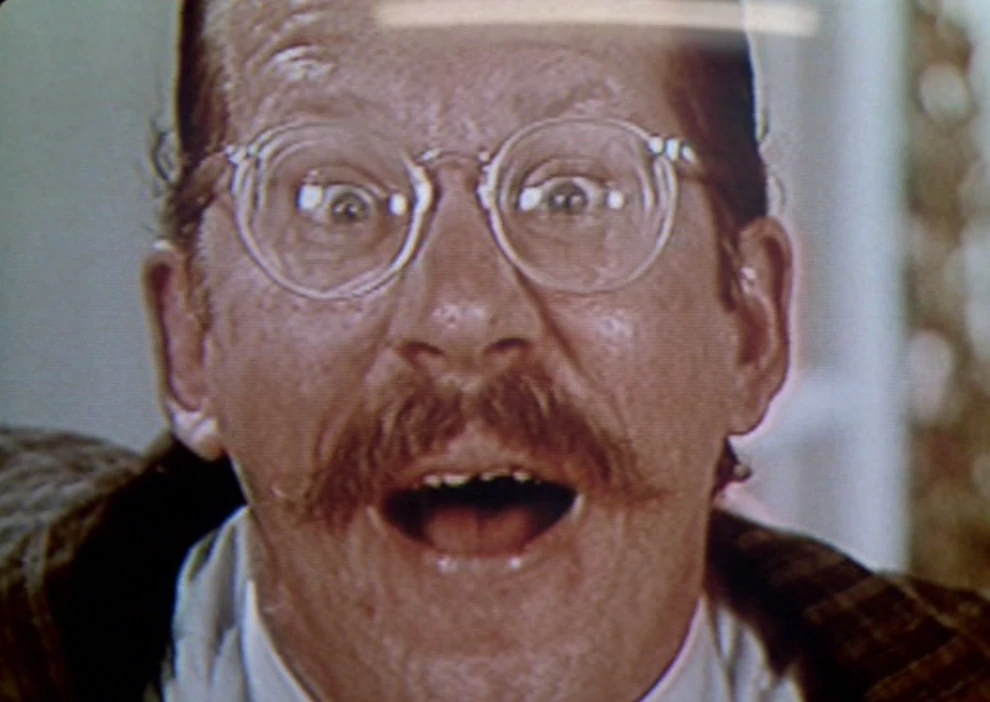
Film: RoboCop (1987), directed by Paul Verhoeven. Film still.
Of course, actual recommendation systems are considerably more sophisticated than this little story suggests. They use multiple signals, and many offer ways to correct or reset recommendations. But the frustration is familiar, and it points towards something rather more interesting than an occasional failure of personalisation.
Perhaps the system hasn’t failed at all.
It may be doing exactly what it was designed to do: identifying patterns in observable behaviour and using them to predict what will keep us watching, clicking or otherwise engaged. The fact that its interpretation bears little resemblance to our actual intentions may not even prevent it from succeeding.
And here lies the peculiar problem. The system doesn’t merely misunderstand us. It begins to organise our surroundings according to that misunderstanding.
For a while, at least, we find ourselves living in somebody else’s idea of who we are.
The person the machine thinks you are
There is a fundamental difference between knowing what somebody has done and understanding why they did it.
Human beings make this distinction constantly, although not always successfully. We interpret one another’s behaviour through conversations, shared experiences, assumptions, misunderstandings and occasional spectacular failures of judgement.
A friend may know that you are researching an unpleasant political movement without sympathising with it. A bookseller can ask whether you actually enjoyed the novel you bought last month. Both can revise their assumptions when you explain yourself.
A computational system has a different problem. It must work with representations of behaviour: observations, patterns, correlations and predictions. This is a perfectly reasonable engineering approach, provided we remember what the system is actually doing.
It is not discovering your inner essence.
It is estimating relationships between observable behaviour and possible future behaviour.

Film: Blade Runner (1982), directed by Ridley Scott. Based on the novel by Philip K. Dick. Rachael portrayed by Sean Young. Film still.
And human actions are wonderfully ambiguous. Watching a video does not necessarily mean enjoying it. Reading about an ideology does not mean supporting it. Spending an hour looking at expensive houses may indicate an intention to buy one, an interest in architecture, a professional assignment, envy, boredom or nothing more than an idle afternoon.
Sometimes we do things for several contradictory reasons simultaneously. Sometimes we don’t particularly know why we did them ourselves.
Prediction requires reducing some of this ambiguity. The reduction can be useful, even remarkably accurate. But it remains a reduction.
A recommendation system can be perfectly right about what you will do next, and completely wrong about why you do it.
The interesting question is what happens when the resulting model becomes our principal guide to the world.
The many people we are
There is another difficulty with the idea of constructing an increasingly accurate profile of a human being. It assumes that there is something reasonably stable to be described.
Of course, we have personalities, histories, habits and recognisable preferences. But we are also different people in different situations, and that is not necessarily a contradiction.
We are parents, lovers, friends, professionals, amateurs, enthusiasts, neighbours, citizens and occasionally complete idiots. We behave differently in each of these roles, not simply because we are pretending, but because different relationships bring out different aspects of who we are. None of them has to be the one authentic self hiding behind all the others.
The sociologist Erving Goffman famously examined everyday social life through the metaphor of theatrical performance. We present ourselves differently in different social settings, adapting our behaviour to the people around us and the situations we inhabit. These performances are not necessarily fraudulent. They are part of how social life works.

Film: Cléo de 5 à 7 (1962), directed by Agnès Varda. Cléo portrayed by Corinne Marchand. Film still.
Yet much of our digital environment has been developed around a remarkably narrow conception of the human being: the consumer.
Certainly, commercial platforms can recognise many of our different roles. They may know that we have children, enjoy contemporary art, work in a particular profession or have recently fallen in love. But these distinctions are frequently translated into variations of the same question: what might this person be persuaded to consume next?
Being a consumer is a perfectly legitimate human activity. I rather enjoy it myself, under the right circumstances. But it is only one role among many, and hardly the most interesting.
Consumer identity is something like a disposable raincoat we put on when we’ve failed to prepare for the weather. Occasionally useful, sometimes necessary, but not something most of us would choose to live in.
And imagine having to live the life that a social media influencer is perpetually pretending to live.
The problem with reducing people to stable consumer profiles is not merely that the profiles may be inaccurate. It is that they overlook the fluid, relational and occasionally contradictory nature of human existence.
Perhaps the more interesting challenge for digital technology is not to construct an ever more complete model of who we are, but to accommodate the many different people we may become, depending on where we are, whom we are with and what we are trying to do.
And sometimes, of course, we don’t want to be anybody in particular. We may simply want to wander around and see what happens.
An identity produced by feedback
The Canadian philosopher Ian Hacking developed an influential idea known as the looping effects of human kinds.
He was interested in how classifications of people can influence the people being classified. A category is not necessarily just a neutral description of some pre-existing reality. Once introduced into institutions, professional practices and everyday language, it may change how people understand themselves, how others treat them and which possibilities become available.
The people being classified may then respond to the category, sometimes accepting it, sometimes resisting it and sometimes changing in ways that force the classification itself to evolve.
Hacking’s original work concerned social and scientific classifications of human beings, not the algorithms of contemporary social platforms. But there is a suggestive relationship between his thinking and digital personalisation.
A system constructs a model of your interests. That model influences what you are shown. What you are shown influences what you can easily encounter and, potentially, what you choose to do next. Your new behaviour becomes part of the evidence used to update the model.
The system is no longer observing an entirely independent reality. It is participating in the production of the circumstances from which its next observations will emerge.
Researchers studying recommendation systems have identified this sort of feedback as an important technical problem. Recommendations influence subsequent user behaviour, and that behaviour may become training or evaluation data for future recommendations.
But there is nothing inherently wrong with the feedback loop. In fact, it is one of the reasons personalised systems can be so useful. A recommendation may introduce us to something unfamiliar, which develops into a genuine interest. Our subsequent behaviour helps the system recognise this change and offer further discoveries.
A feedback loop can also become a trap.
Consider the consequences of a small initial error. If the system mistakenly believes you are interested in conspiracy theories, it may offer you more conspiracy theories. Some of them may attract your attention, perhaps because they are exceptionally absurd. Your reaction may become another signal. Over time, the system can accumulate evidence supporting a conclusion that was never particularly accurate in the first place.
But perhaps the more troubling possibility is that the system does not remain entirely mistaken.
Repeated exposure can change our interests. Familiarity can create curiosity. An unfamiliar subject may become part of our daily environment simply because we keep encountering it.
This does not mean that recommendation systems can manufacture any belief or preference they like. Human beings resist, ignore, reinterpret and reject what they see. The effects of algorithms are neither uniform nor unlimited.
Still, the distinction between predicting a preference and helping to produce that preference becomes difficult to maintain.
The crucial question is not simply how accurately a system predicts our behaviour, but what possibilities it creates for us to influence the process. Can we question its assumptions? Can we explore something without having that exploration immediately incorporated into a lasting profile? Can we deliberately step outside the patterns it has identified?
And perhaps most importantly, can we use the system to discover interests we do not yet have?
A system that learns from us is useful. A system that also allows us to participate in shaping what it learns, and what it does with that knowledge, could be something considerably more interesting.
From discipline to modulation
In 1990, Gilles Deleuze published a short and remarkably suggestive essay, Postscript on the Societies of Control.
Building on Michel Foucault’s analysis of disciplinary institutions, Deleuze proposed that modern forms of power were moving beyond the organisation of people within relatively distinct enclosed spaces such as schools, factories, hospitals and prisons.
In their place, he described increasingly continuous forms of control. Rather than placing individuals within stable institutional arrangements, these systems would operate through ongoing adjustment, monitoring and modulation.
Deleuze introduced the strange term dividuals to describe human beings understood through divisible information, samples and data rather than primarily as coherent individuals.
He was writing before the World Wide Web became a mass medium, before smartphones and before today’s recommendation systems. There is no reason to pretend that he anticipated their precise technical development.
But his language is remarkably useful for understanding a world in which the environment around us changes continuously in response to our recorded behaviour.
A traditional television broadcaster might decide what millions of people would watch on a particular evening. A personalised feed makes a different proposition. Each person can receive a continuously adjusted selection, shaped by earlier interactions and by patterns detected across many other users.
We move through an environment that moves in response to us.
This is an extraordinary technological achievement. It is also a rather peculiar social arrangement.

Film: Brazil (1985), directed by Terry Gilliam. Mrs Ida Lowry portrayed by Katherine Helmond. Film still. (Photo by Embassy International Pictures/Sunset Boulevard/Corbis via Getty Images)
The system does not have to tell us what to think. It can influence what becomes available, familiar, attractive or convenient. It can determine which possibilities appear first and which require additional effort to discover.
None of this necessarily amounts to coercion. Yet power does not always operate by forbidding something. Sometimes it works by making certain paths exceptionally easy to follow.
And then there is the question of who controls the paths.
The optimisation of a feed may be guided by several objectives, including relevance, satisfaction, safety and commercial performance. These objectives can conflict. What holds our attention is not always what we value most. What produces an immediate response is not necessarily what we would choose after reflection.
A personalised environment inevitably contains assumptions about which outcomes matter.
The interesting question is whose assumptions they are.
The comfort of being predictable
It would be a mistake to turn unpredictability itself into a virtue.
Most of us appreciate living in a world in which some things happen as expected. We want trains to follow schedules, medicines to produce reasonably predictable results and familiar software controls to behave consistently. We value people who keep their promises.
Even creativity depends partly on predictability. Language works because words and conventions are sufficiently stable to make communication possible. Music creates expectations that composers can fulfil, complicate or violate. A surprising event can only be surprising against a background of things that are less surprising.
And personalisation can help people discover things they genuinely love.
A recommendation system that understands musical relationships beyond the obvious categories may introduce someone to an unfamiliar composer. A well-designed discovery service can connect a small audience with an artist who would otherwise remain unknown. For someone navigating an overwhelming abundance of information, intelligent filtering can be a form of liberation.
The problem begins when personalisation becomes too successful at reproducing what is already known.
Imagine a music service that gives you increasingly accurate recommendations based on everything you have enjoyed over the previous decade. It knows your favourite genres, recording periods, preferred instruments and the moods associated with different listening situations.
The recommendations are excellent. You like almost everything.
But slowly, without noticing, you may cease to encounter the music that would have changed your taste.
This is not necessarily what happens in practice. Discovery systems can deliberately introduce novelty and diversity. Yet the thought experiment exposes a tension between satisfying existing preferences and making room for preferences that do not yet exist.
I am interested in the latter.
A person who enjoys contemporary classical music today may have spent much of their youth listening to punk rock. Someone fascinated by architecture may unexpectedly develop a passion for fungi, political history or experimental cinema. A temporary curiosity may become a lifelong pursuit.
People change, and they do not always know in advance how.
A system designed to understand us through our past behaviour should perhaps be especially careful not to make that past too comfortable a place to remain.
The right to begin again
For Hannah Arendt, human freedom was closely connected to the capacity for action, and particularly to the possibility of beginning something new.
She developed the concept of natality, rooted in the fact that every human birth introduces somebody new into the world. In her political philosophy, this becomes a way of understanding our capacity to act in ways that cannot be fully derived from what has happened before.
Arendt was not writing about digital personalisation. Her concerns included political action, plurality and the unpredictable consequences of people acting together in a shared world. Reducing her argument to a demand for more surprising consumer recommendations would do it a considerable injustice.
Nevertheless, her understanding of action suggests a different way of approaching the relationship between human beings and predictive systems.
We are not merely the accumulated results of our previous choices.
We can initiate something.
Curiously, the idea of beginning again also brings to mind the advertising airships drifting through the polluted streets of Blade Runner, promising a new life in the off-world colonies. Even a fresh start, it seems, can be packaged as a commercial proposition.
Arendt, of course, had something rather different in mind.
This is not a mystical claim that human behaviour is entirely unpredictable, nor that every decision emerges from some inaccessible source of free will. People have habits, histories, constraints and remarkably consistent patterns of behaviour.
Yet the possibility of doing something new is different from the statistical likelihood of repeating something old.
Consider how often a significant change begins with a decision that would have looked improbable from the outside. Someone leaves a career, moves to another country, abandons a long-held belief, begins studying an unfamiliar subject or becomes involved in a community they had never previously considered joining.
Such changes may have understandable causes. They may even be predictable in retrospect. But they cannot always be adequately represented by extending the patterns of yesterday into tomorrow.

Film: Orlando (1992), directed by Sally Potter. Orlando portrayed by Tilda Swinton. Film still.
A system organised exclusively around those patterns risks treating transformation as an exception to be corrected rather than a possibility to be welcomed.
Perhaps one of the freedoms worth protecting in digital life is the freedom to become somebody that our data does not yet describe.
But perhaps freedom in a personalised digital environment sometimes means nothing more complicated than being able to interrupt the pattern.
Not to erase everything we have done, necessarily, or to construct a new profile of ourselves. Simply to stop following the direction in which our previous behaviour has been carrying us.
We may not know what we want instead. We may have no particular destination in mind. We might just be tired of the landscape.
And surely, we should be allowed to change direction without first explaining where we intend to go.
The trouble with knowing ourselves
There is another complication.
The person we believe ourselves to be is not necessarily the person we are.
We are quite capable of misunderstanding our own motivations. We rationalise decisions after making them. We construct stories about our tastes and values that are more coherent than our actual behaviour.
An algorithm can occasionally recognise a pattern that we have not noticed. Its recommendation may be unexpected precisely because it has discovered a relationship that escaped our conscious understanding.
Perhaps I really am more interested in conspiracy theories than I care to admit.
Or perhaps I am merely fascinated by the theatrical ingenuity with which people construct them. The distinction may not be immediately obvious, even to me.
This makes the relationship between personalisation and autonomy more interesting than a simple opposition between machine predictions and authentic human preferences.
A service that only follows our explicit instructions might sometimes be less useful than one capable of making informed guesses. We frequently do not know what we want until we encounter it.
But a useful guess should remain a guess.
It should not silently acquire the authority of a settled fact about our identity.
There is a difference between a system saying, in effect, you might find this interesting, and constructing an entire environment around the assumption that this is the sort of person you are.
The first opens a possibility. The second can begin to close others.
A little room for accidents
What might an alternative look like?
The obvious answer is to give people more control over recommendations. Let them correct mistaken inferences, remove unwanted subjects, adjust the balance between familiarity and novelty, and understand something about why particular content appears.
These are sensible improvements, and some platforms already provide versions of them.
But perhaps we should also question the deeper assumption that the purpose of a digital environment is to present an ever more accurate reflection of its user.
A city does not usually work that way.
When you walk through a city, you encounter things that have not been selected for you. A poster may advertise a concert by an artist you have never heard of. A conversation overheard in a café may introduce an unfamiliar idea. You may take a wrong turn and discover a place that becomes important to you.
These experiences are not entirely random. Cities have their own inequalities, commercial priorities, architectural restrictions and mechanisms of exclusion. The apparent freedom of urban exploration depends on social conditions that are far from equally distributed.
Nevertheless, a city offers a useful contrast to an environment organised primarily around predicting what you will want next.
Its significance is not exhausted by its ability to satisfy your existing preferences.
It contains other people’s projects, unfamiliar places, accidental encounters and possibilities that have nothing to do with the person you were when you left home.

Film: The Gleaners and I (2000), directed by Agnès Varda. Film still.
We might imagine digital environments that preserve more of this quality. Systems in which people can move deliberately between familiar and unfamiliar territories, explore relationships without having every action interpreted as a new permanent preference, and encounter communities or ideas outside their established profiles.
In such environments, recommendation might be one useful instrument among others, rather than the invisible organising principle of almost everything.
There is an important qualification, however. Greater human agency should not become another obligation imposed on the user.
Not everyone wants to spend their days managing preferences, adjusting recommendation settings or continuously declaring which version of themselves they are currently inhabiting. Sometimes we simply want a service to work, without having to explain ourselves.
A well-designed environment can make decisions on our behalf when that is useful. It should also make it possible to take back control when we want to.
Perhaps the most meaningful freedom is not having to make every decision ourselves, but being able to decide which decisions we wish to make.
And sometimes, being able to abandon a direction without immediately choosing another.
The objective would not be to abolish prediction. It would be to prevent prediction from becoming the only available way of navigating the world.
A future not yet in the data
I keep returning to the unfortunate person who fell asleep during the conspiracy theory video.
The joke works because the mistake is so ordinary. A machine observes an action, misunderstands its meaning and then behaves with the cheerful persistence of an acquaintance who has bought you the same unwanted Christmas present for fifteen consecutive years.
But the comedy points towards a more serious question.
When systems learn from our behaviour, what kind of relationship should they establish with the people whose behaviour they observe? Should they attempt to understand us so thoroughly that the world around us becomes increasingly predictable? Or should part of their purpose be to preserve the possibility of encountering things, people and ideas that our previous actions would never have suggested?
The answer is probably not one or the other.
We need continuity as well as change, recognition as well as surprise. There are days when we want familiar music, familiar faces and the reassurance of things that behave as expected. There are other days when what we most need is something we could not have asked for because we did not yet know it existed.
We are also different people in different situations. The curious amateur, the concerned parent, the lover, the professional and the idle wanderer do not necessarily want the same things, even when they inhabit the same body. A useful digital environment should be capable of accommodating these differences without insisting that every passing interest become part of a permanent identity.
And sometimes we may simply want to stop.
Not because the system is wrong about us, or because we have arrived at some new understanding of who we are. Perhaps we are just finished with whatever we were doing.
There is no particular reason why yesterday’s interests should be allowed to dictate tomorrow’s possibilities.
We are developing technologies capable of recognising extraordinary patterns in language, images, behaviour and human relationships. It would be a strange waste of that intelligence if we used it primarily to make the world around us resemble the world we already know.
Perhaps a worthwhile digital environment should be able to offer both familiarity and surprise, without treating either as a defect. It should be intelligent enough to recognise patterns and flexible enough to let us leave them behind.
And perhaps we should be a little suspicious of systems that promise to know us better than we know ourselves.
They may sometimes be right.
But even when they are, they are describing a person who has already existed.
We should remain free to become someone they could not have predicted.
References and further reading
- Hannah Arendt, The Human Condition (1958). On action, plurality, natality and the capacity to begin something new.
- Gilles Deleuze, Postscript on the Societies of Control (1990; English translation 1992). On continuous modulation and transformations in the organisation of power.
- Michel Foucault, Discipline and Punish (1975; English translation 1977). On disciplinary institutions, observation and normalisation.
- Erving Goffman, The Presentation of Self in Everyday Life (1956/1959). On social roles and the dramaturgical organisation of everyday interaction.
- Ian Hacking, The Looping Effects of Human Kinds (1996), in Causal Cognition: A Multidisciplinary Debate. On interactions between classifications and the people classified.
- Paul Verhoeven, RoboCop (1987).
- Ridley Scott, Blade Runner (1982).
- Agnès Varda, Cléo de 5 à 7 (1962).
- Terry Gilliam, Brazil (1985).
- Sally Potter, Orlando (1992).
- Agnès Varda, The Gleaners and I (2000).
Leave a Reply