Art, attention and the strange relationship between what we experience and the conditions that make experience possible.
Text and editorial direction: Ville Kiiski
Research, writing and fact-checking: ChatGPT
SUNDAY ESSAYS #03 — 8 November 2026
Running late in Compiègne
I first encountered the French philosopher Bernard Stiegler at an international design conference in Compiègne, France, in October 2009. He was scheduled to give the opening keynote, the first presentation on the first morning of the conference.
I had arrived in town late the previous evening. Something had gone wrong with the accommodation, I had slept badly, and by the time I was supposed to be at the university, I was already running late. For a moment I considered giving up on the opening altogether. Then I remembered where I was. Surely, I thought, the French wouldn’t necessarily begin at precisely the advertised time.
I was right.
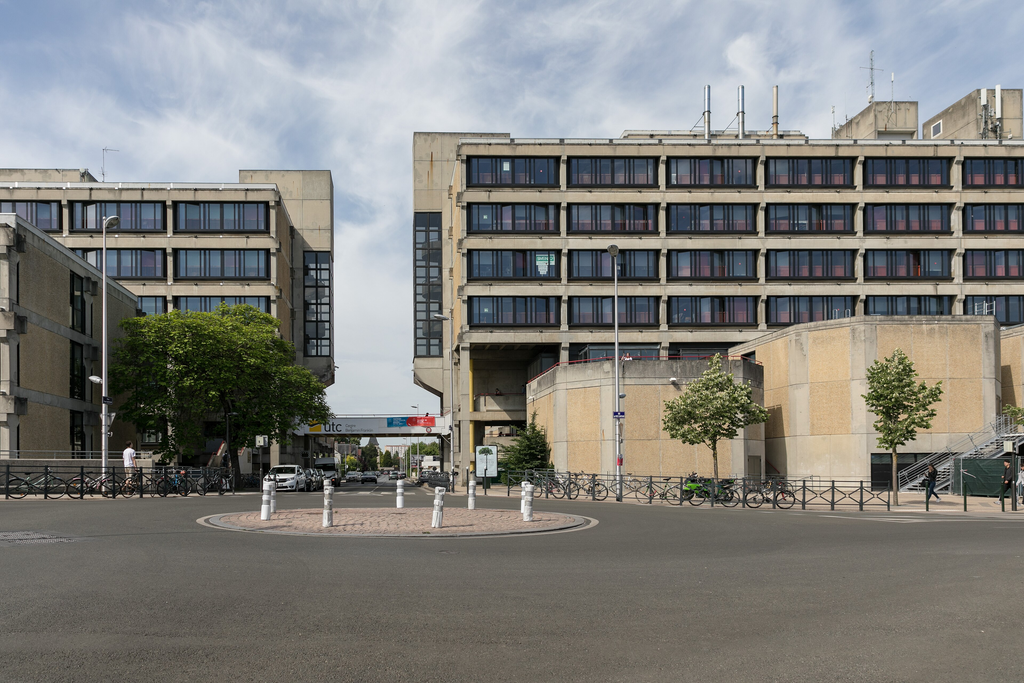
Photo: Basile Morin / CC BY-SA 4.0
When I finally arrived, sweating and out of breath, perhaps ten or fifteen minutes after the scheduled start, people were still wandering around with cardboard coffee cups in their hands. Stiegler himself was standing near the speaker’s area, chatting leisurely with a small group of people who seemed to be both conference participants and personal acquaintances. I had missed nothing. The conference, devoted to the design of interactive products and experiences, was about to begin.
I remember Stiegler speaking about the relationship between human beings and technology. What particularly struck me was his insistence that technology had not simply entered human life as an external collection of tools. Human beings had themselves changed through their relationships with technologies, adapting to them and developing with them throughout history. I cannot reconstruct his argument in detail after seventeen years, and I am not entirely sure how much of it I understood that morning. But I remember thinking that here was someone whose ideas I ought to follow.
I subsequently bought several of his books. They were not exactly light reading.

Photo: Berkeley Center for New Media / CC BY-SA 2.0
There was also his extraordinary biography.
Before becoming one of Europe’s most original philosophers of technology, Stiegler had worked in various occupations, run a jazz club – and committed a series of bank robberies. He spent nearly five years in prison between 1978 and 1983. During his imprisonment he began studying philosophy with extraordinary intensity, receiving books and guidance through correspondence with philosophers, particularly Gérard Granel, who helped him pursue university studies from prison.
After his release, Granel introduced him to Jacques Derrida, who would eventually supervise his doctoral work. Stiegler later became associated with some of France’s most important cultural institutions, including IRCAM and the Centre Pompidou.
There is something wonderfully improbable about that trajectory. A former bank robber becomes a philosopher, a leading thinker of technology and a director of cultural institutions. It is the sort of biography that makes the relationship between intellectual life and lived experience difficult to reduce to a conventional professional résumé.
I have returned to Stiegler’s work repeatedly since then, particularly his writing on attention, culture and technology. Lately, while thinking about what digital environments might offer contemporary art, I have found myself returning to him again.
The room around the artwork
Imagine entering a museum to encounter a video installation.
You leave the street, perhaps buy a ticket, walk through galleries and eventually enter a darkened room. The light changes. The acoustics change. You may have to wait for your eyes to adjust. You find somewhere to stand or sit. Other visitors are present, but they have generally come to do something similar to what you are doing.
The work begins, or perhaps it has already begun. You must decide whether to watch from the middle, wait for the next cycle, stay for a few minutes or remain until the end.
None of these circumstances is necessarily part of the video file. Yet all of them participate in the experience.
Now imagine watching the same video on a phone.
The images and sounds may be technically identical. But the room has disappeared. The video appears inside an environment where a message from a colleague, a news alert, an advertisement or an invitation to view something else can arrive at any moment. The screen is also a workplace, a shopping centre, a communication device, a map, a newspaper and a gateway to practically everything.
We often discuss these differences as matters of convenience or distraction. Museums encourage concentration, phones encourage multitasking. But perhaps something more interesting is happening.
What if the conditions of experiencing an artwork are themselves part of the artistic experience?
The museum visit involves a series of small rituals. Travelling there, entering a building, passing through doors, leaving certain everyday obligations temporarily outside and adopting the behaviours expected in a cultural institution. Even the ticket can function as a kind of threshold. We have made an arrangement with ourselves, and perhaps with the institution, to give something our time.
The museum does not merely display art. In a sense, it stages attention.
Brian O’Doherty’s influential essays, collected as Inside the White Cube, examined the modern gallery as an ideological construction. The white walls, controlled lighting and apparent removal of everyday life do not create a neutral space. They establish a particular relationship between objects, institutions and spectators.
The gallery is not simply a container. It participates in producing the significance of what it contains.
Photo: Ville Kiiski
This also makes the gallery’s apparent sanctity politically complicated. The space that separates art from everyday distractions can simultaneously separate it from everyday people. Its conventions may encourage concentration, but they can also create social distance, exclusivity and forms of authority that are difficult to question.
There is no reason to assume that the museum’s peculiar atmosphere is the natural home of art. Art existed long before the modern museum, and some of the most consequential artistic movements have deliberately challenged the institutions that claimed to protect it.
Still, the experience of stepping into a space devoted to art is not imaginary. Something happens when the surrounding world temporarily grants us permission to pay attention differently.
Perhaps it is not the sanctity of the space that matters, but the possibility of entering another relationship with time.
Bernard Stiegler and the industrial organisation of attention
Stiegler approached technology from an unusual starting point. For him, human beings do not simply possess an inner mental life that technologies subsequently influence from the outside. Human thought, memory and experience have always developed in relation to technical objects, from writing and recording devices to the increasingly complex systems through which contemporary societies organise communication.
Technology is part of how we remember and think. It is also part of how we learn to pay attention.
This makes attention far more than a scarce commodity competing for allocation between different activities. Attention is involved in the formation of memory, knowledge, desire, care and relationships. What we attend to, and how we learn to attend to it, helps shape who we become.
Stiegler’s concept of symbolic misery concerns the consequences of industrially organised cultural production for our capacity to participate in the making of shared meaning. The problem is not simply that commercial entertainment is superficial, or that popular culture is inferior to high art. It is that the industrial management of perception and desire can weaken the processes through which people develop their own symbolic lives.
His critique of the culture industries belongs to a longer intellectual history, but it becomes particularly provocative in the context of digital platforms.
Contemporary attention-based businesses do not merely distribute cultural objects. They construct environments in which the selection, presentation, timing and interruption of experiences are continuously organised according to commercial priorities.
An artwork may appear between an advertisement, a personal message and a recommendation generated by a system whose principal objective is to keep the user engaged.
The work itself may be extraordinary. But the environment has its own ideas about what the spectator should do next.
This creates a distinction that seems increasingly important. An environment can be extremely effective at capturing attention without necessarily supporting the kind of attention through which a meaningful experience develops.
Photo: Ville Kiiski
The number of seconds spent looking at something tells us remarkably little about what happened during those seconds. A fleeting encounter can change the way we understand the world. An hour of passive exposure may leave almost nothing behind. Duration matters, but it is not the same thing as depth.
Stiegler’s own account of his imprisonment adds an unexpected human dimension to this question. In prison, he developed an extraordinarily disciplined practice of philosophical study. Decades later, he reflected on the disturbing possibility that leaving prison might also mean losing the conditions under which he had learned to think in this particular way.
That does not make imprisonment desirable, nor does it establish a general relationship between constraint and creativity. His experience was profoundly particular.
But it suggests that freedom cannot always be measured by counting available choices.
The freedom to move instantly between a million possible experiences is not necessarily the same as the freedom to remain with one experience long enough for something unexpected to happen.
Art without the temple
There is an obvious objection to all this, and it deserves to be taken seriously.
Why should art require a dedicated space, special conventions or undivided attention? Isn’t the removal of these requirements one of the great achievements of technological reproduction?
Walter Benjamin was asking related questions in the 1930s. In his famous essay on the work of art in the age of mechanical reproduction, he examined how photography and film transformed the relationship between artworks, their audiences and the traditions surrounding them.
The transformation involved a loss of the artwork’s unique, historically situated presence, the phenomenon associated with Benjamin’s concept of aura. But Benjamin did not simply present this loss as a cultural catastrophe.
Technical reproduction made possible new relationships between art and society. Works could circulate beyond the places and institutions to which they had once belonged. Film introduced new ways of perceiving movement, space and time. Mass audiences could develop forms of reception that differed fundamentally from the contemplative encounters associated with traditional art.
Benjamin also challenged the assumption that distracted reception is necessarily inferior to concentrated contemplation. Architecture, for example, is often experienced through use and habit rather than through deliberate aesthetic examination. Aesthetic experience has never had only one legitimate form.
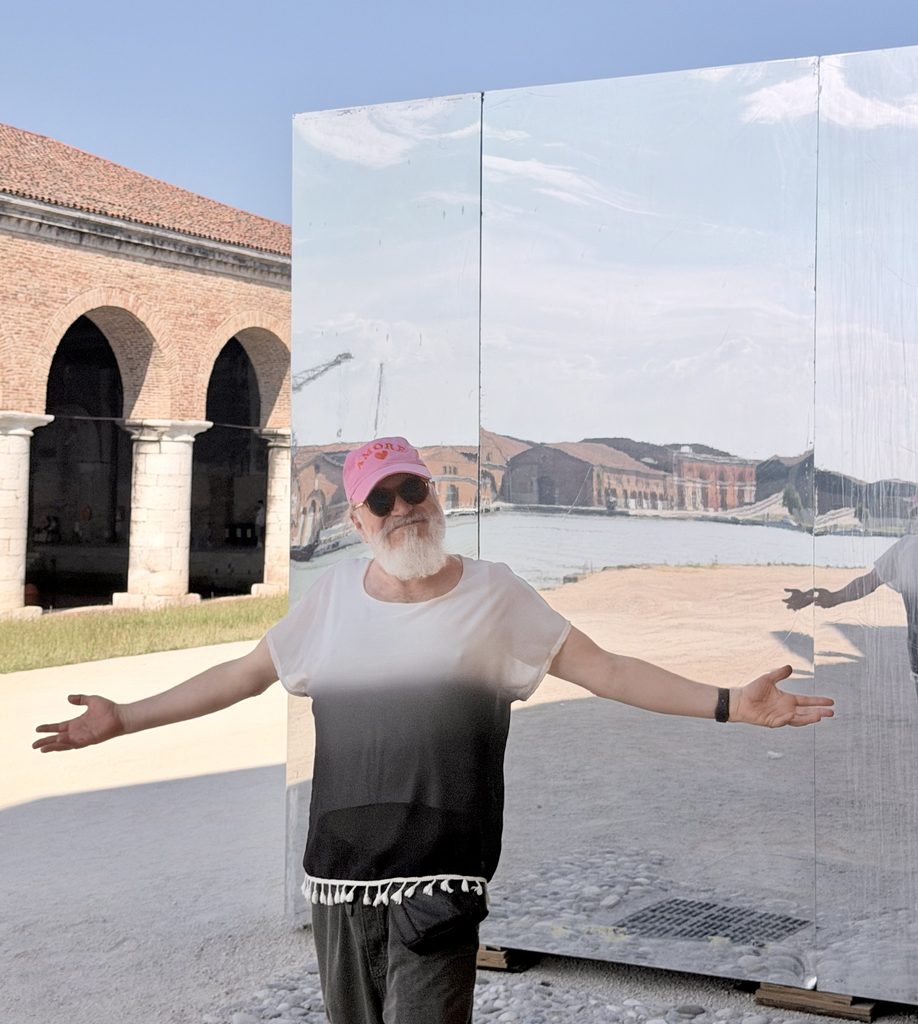
Photo: Ville Kiiski
There is something liberating in this argument, particularly when we consider the extraordinary range of people who now encounter artworks through digital media.
A person may discover an artist on a phone while travelling on a bus, become fascinated, investigate further and eventually begin making something themselves. A video shared online may reach audiences who would never enter the museum where it was originally shown. Images may travel across languages, borders and institutional hierarchies in ways that would once have been difficult or impossible.
It would be absurd to dismiss these encounters simply because they take place on ordinary screens.
Nor can attentive experience be guaranteed by architecture. A visitor can walk through the most carefully designed exhibition without really looking at anything, just as someone can become completely absorbed in a work encountered accidentally in the middle of everyday life.
Perhaps the distinction we need is not between museum and screen, or even between concentrated and distracted attention.
It is between environments that make certain experiences possible and environments that systematically organise our behaviour towards other ends.
Even that distinction is not entirely satisfactory. Commercial platforms can generate genuine discoveries, and museums have their own economic incentives. Aesthetic experience is not obliged to respect the categories we devise to explain it.
But the distinction is a useful place to begin.
A world called Myst
In 1993, the American studio Cyan released a computer game called Myst.
It begins on an apparently deserted island. The player moves through a strange landscape, examining objects, exploring buildings and trying to understand the relationships between the things encountered there. Much of the experience consists of looking, listening, remembering, making connections and gradually discovering how the environment works.
There are no conventional instructions explaining everything in advance. The world offers clues, but understanding them is part of the experience.
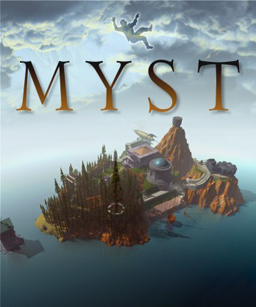
Myst became a landmark of computer gaming, and in 2012 it was included among the first fourteen video games acquired by New York’s Museum of Modern Art for its collection of interactive design.
The acquisition was interesting not only because it recognised video games as culturally significant objects, but because of how MoMA approached them. Under curator Paola Antonelli, the museum considered aesthetics, space, time and behaviour as essential dimensions of interaction design.
Behaviour.
That is a remarkable criterion when considered alongside traditional ways of evaluating artworks. The object of interest is not simply the images presented on a screen, nor even the sequence in which they appear. It is also what the environment enables or asks the person encountering it to do.
In Myst, the player’s attention is not merely directed towards a fictional environment. Exploring that environment is part of the work’s unfolding. The spectator is no longer quite a spectator, although calling the player a co-author would also be misleading.
The work establishes a world, a set of possibilities, rules and relationships. The player develops an experience within them.
What makes Myst particularly interesting here is the relationship between immersion and purpose. Its mysterious environment is fascinating in itself, but the player is also trying to achieve something. There are clues to find, mechanisms to understand and puzzles to solve. The world invites contemplation while the game’s structure gives the player reasons to remain inside it.
There is a philosophical distinction worth considering here. In The Grasshopper: Games, Life and Utopia, Bernard Suits described games in terms of goals, rules and the voluntary acceptance of unnecessary obstacles. A game establishes a situation in which achieving something requires the player to accept particular constraints.
Artworks do not necessarily establish objectives of this kind. We do not generally consider a painting completed when the viewer has solved it, nor does a symphony require the listener to achieve a predefined result. Even a narrative film, despite moving towards an ending, does not ask its audience to win.
Yet the distinction is less absolute than it first appears. Games can contain open-ended experiences, while artworks can impose precise instructions, tasks and rules. And the fact that a game has a goal does not mean that everything meaningful in the experience is reducible to reaching it.
In Myst, the puzzles encourage the player to stay, but what remains in memory may be the atmosphere, the strangeness of the spaces or the gradual feeling of inhabiting a world that follows unfamiliar rules.
The game gives us something to do, and in doing so, it gives us time to experience something else.
This is an important counterexample to the notion that digital screens inevitably reduce aesthetic experiences to flat, interchangeable content.
A screen can be an entrance to a world rather than merely a surface on which images appear.
Two encounters with Hito Steyerl
I have two memories from contemporary art exhibitions that have stayed with me for more than twenty years. Like most memories of exhibitions, they are not entirely reliable. I can remember the works, the circumstances of encountering them and certain details of the spaces with considerable vividness, while other details have probably changed or disappeared along the way.
The first is from Manifesta 5, held in Donostia-San Sebastián in 2004.
Manifesta is a nomadic European contemporary art biennial, and its exhibitions are frequently distributed across a city. Visiting them can become an exercise in urban exploration as much as an encounter with art. For several days I walked around San Sebastián with a map, searching for works in museums, temporary exhibition spaces and unfamiliar corners of the city.
In my memory, I entered a damp, slightly musty basement room where a film was playing.
It was an intriguing film. I sat down to watch.
The story seemed almost unbelievable. A young woman had appeared in a feminist martial arts film made by a friend. Years later, she joined Kurdish guerrillas, was killed, and became a revolutionary martyr whose image was carried in demonstrations.
I found myself wondering whether I was watching a documentary or a fiction. Then, rather quickly, I realised that perhaps the distinction mattered less than I initially thought. The work was doing something quite extraordinary with the relationship between images, political identities and the stories through which people become symbols.
I watched the whole film.
As I often did when encountering an artist whose work interested me, I wrote the name in my notebook: Hito Steyerl.
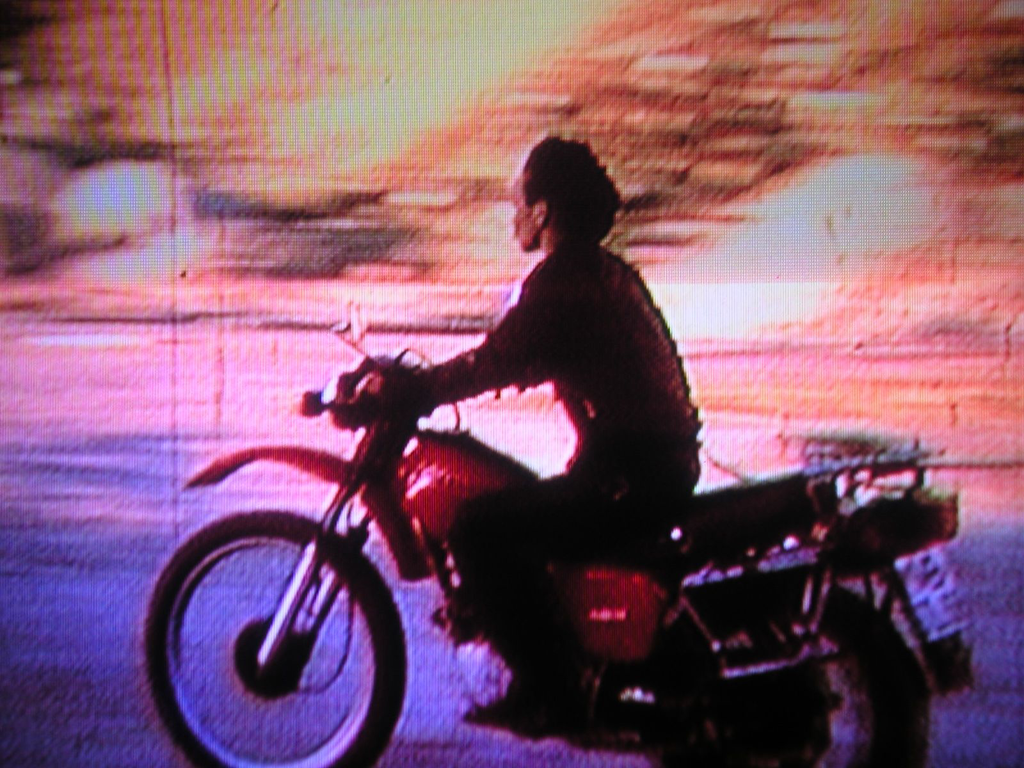
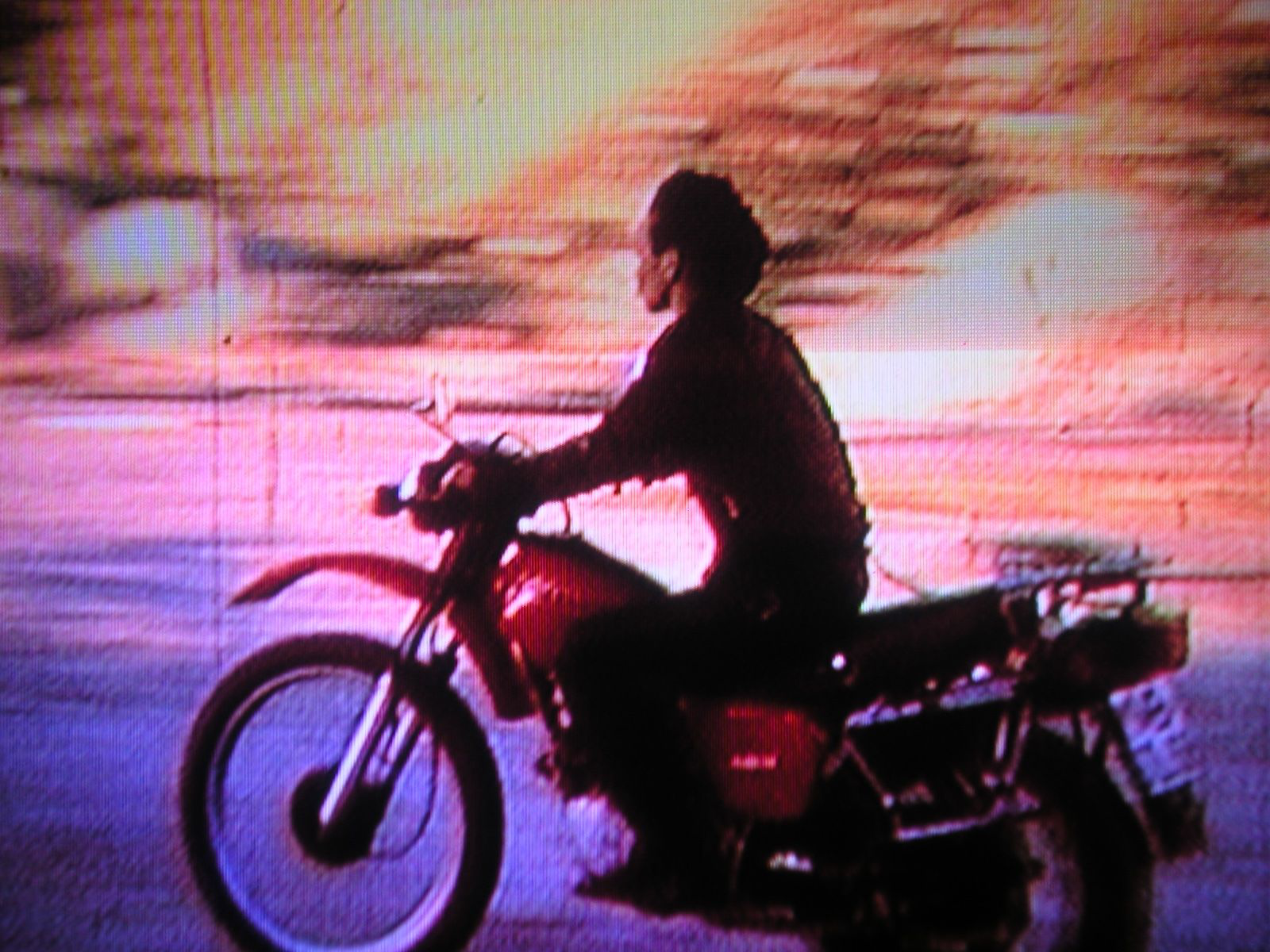
Image CC 4.0 © Manifesta 5/Hito Steyerl. Courtesy the artist, Andrew Kreps Gallery, New York; Esther Schipper, Berlin.
The work was November, a 25-minute film made in 2004, based on the life of Steyerl’s friend Andrea Wolf. I now know that it was produced for Manifesta 5 and officially shown at Museo San Telmo. Whether the basement room I remember was part of that building, or whether my memory has rearranged the geography of the encounter, I cannot say.
What matters to me here is that the work managed to distinguish itself in the middle of an exceptionally dense experience of art. I was spending entire days looking at exhibitions, navigating unfamiliar spaces and absorbing more impressions than I could possibly retain. Yet this particular film made me stop and remain.
Three years later, at Documenta 12 in Kassel, something similar happened.
I remember encountering a video installation in an awkward location, somewhere around a stairwell or atrium, with limited places to sit and a somewhat inconvenient viewing position. The video was already running when I arrived. It drew me in almost immediately.
I watched for roughly half an hour, standing up. Having arrived in the middle, I stayed until the end, then watched from the beginning until I had seen the section I had missed, and a little more.
The work was inventive, funny, unsettling and difficult to categorise. It moved between documentary investigation, performance, cultural criticism and unexpected associations. I wrote its title in my notebook: Lovely Andrea, by Hito Steyerl.
This time I also had a catalogue, and I began looking more seriously into the artist.
I discovered that the film I had encountered at Manifesta three years earlier, November, had been made by the same person.
Steyerl became one of the artists whose work I have followed most closely ever since.
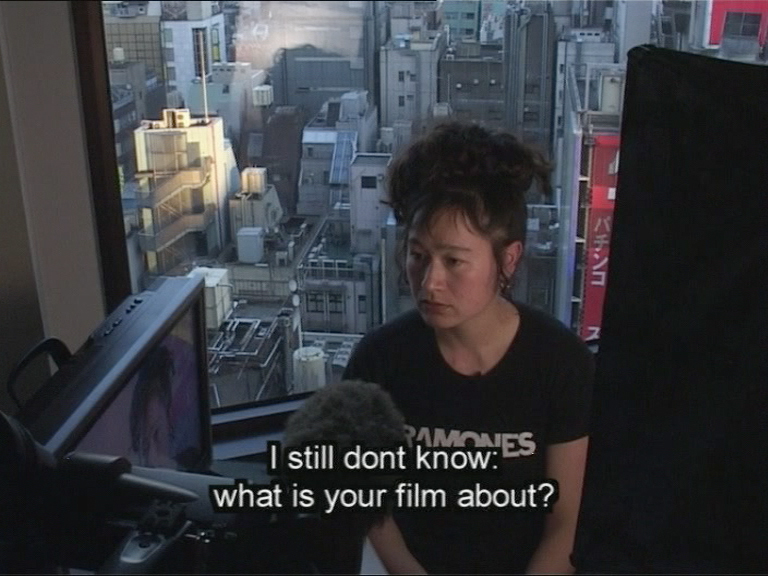
The curious detail is that I remember the exhibition environments almost as clearly as the act of watching. In San Sebastián, a dim, uninviting room. In Kassel, an awkwardly positioned screen and a standing audience. Neither was the idealised white cube. Neither offered the perfect conditions of contemplation that a museum might supposedly strive to provide.
In fact, an account by film scholar Thomas Elsaesser confirms that Lovely Andrea was shown in the atrium of the Fridericianum, in a space that functioned much like a stairwell. He, too, described being captivated by the work despite its unusual presentation.
There is a small consolation in discovering that somebody else’s memory of the physical circumstances resembles your own.
But the more interesting question is what these experiences suggest about attention.
Both occurred in the middle of enormous international exhibitions, when I had already spent hours, perhaps days, encountering artworks. These events produce their own peculiar form of saturation. One moves between works, artists, buildings, curatorial arguments and unfamiliar places until the experience can become almost overwhelming.
And still, certain works are capable of arresting that movement.
The exhibition gives the work a context. It may prepare us to look, but it cannot determine what will hold us. Occasionally an artwork seems to create its own conditions of attention, even when its surroundings are less than ideal.
I would hesitate to turn two personal memories into a general theory. Yet they make me reluctant to accept that the environment is always more powerful than the work.
Sometimes the work wins.
Can art command its own attention?
There is a tempting conclusion here: perhaps genuinely compelling art will always find a way to reach its audience, even in the most fragmented digital environment.
I would like to believe that. But it would be too easy.
The fact that I remained with Steyerl’s films does not prove that I would have encountered them in the first place without the curatorial arrangements of Manifesta and Documenta. I had travelled to those cities specifically to experience contemporary art. I was already looking for something worth paying attention to.
The exhibitions created a context of expectation, even when individual works were presented in imperfect circumstances.
That context matters. It helps explain why the same film may be approached differently in a museum, an online archive, a social feed or a message from a friend.
Yet the experience also suggests that the artwork is not merely a passive object waiting for attention to be allocated to it. Its own form, rhythm, mystery, narrative and sensory qualities can call forth a kind of attention that the surrounding environment did not guarantee.
Different artistic forms accomplish this in different ways.
A painting or photograph can often make an immediate visual impression. It can establish a relationship with the viewer before any extended commitment has been made, although understanding it may subsequently require far more time. A narrative film offers a sequence of events whose development encourages the spectator to remain until the end. A game may add explicit tasks and rules, giving the participant a reason to keep exploring.
But these are tendencies rather than laws. Some paintings unfold only through prolonged attention. Some films refuse conventional narrative, and some games have no meaningful endpoint. A demanding artwork may deliberately resist our expectations of clarity, immediacy or completion.
The danger would be to conclude that art must become more visually arresting, more narrative or more game-like in order to survive online.
That would simply reproduce the attention economy’s demand that every cultural experience continuously justify its claim on our time.
Perhaps the more interesting question is whether digital environments can develop conventions that help different kinds of artworks find the conditions they need.
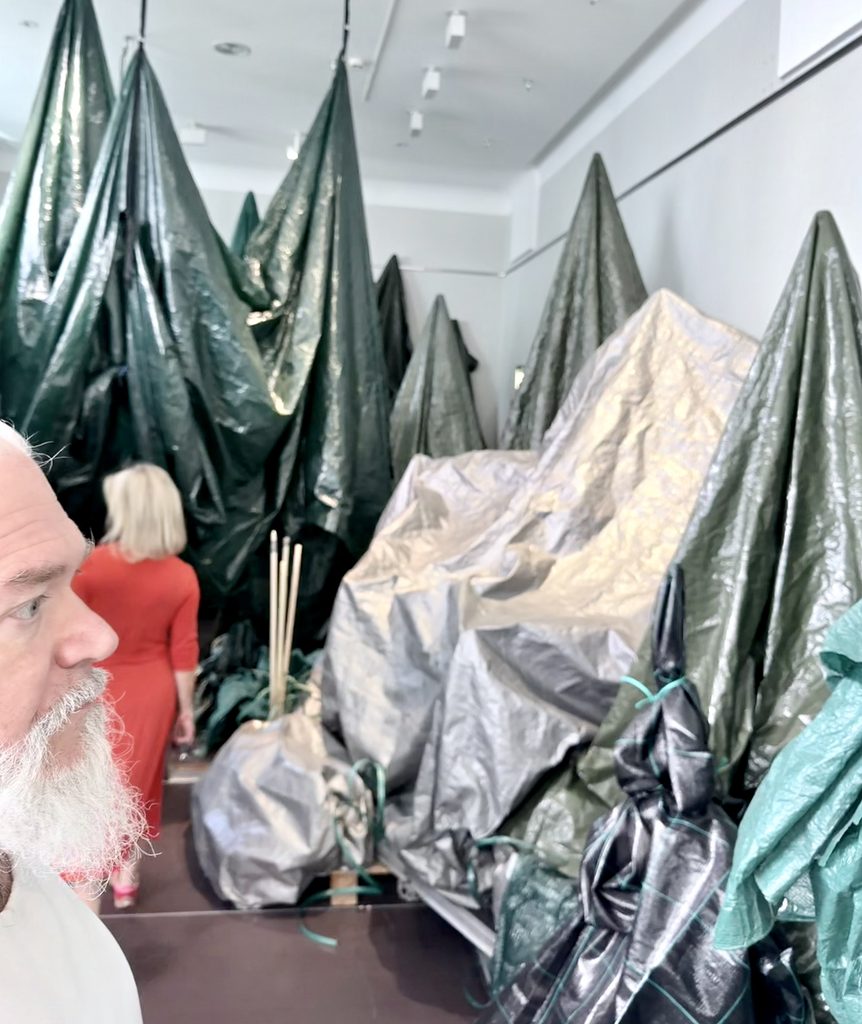
Photo: Ville Kiiski
Beyond the window
Virtual and augmented reality are obvious candidates when thinking about new environments for experiencing art.
Virtual reality can create the sensation of entering a space rather than looking through a window into one. By surrounding the viewer with a simulated environment, it can also reduce the presence of competing visual stimuli from the immediate physical world. In some respects, this resembles the deliberate separation from everyday surroundings that takes place when entering a museum or a darkened cinema.
The promise has been discussed for decades. Yet VR has repeatedly struggled to become an ordinary medium of cultural consumption. Headsets introduce costs, physical inconvenience and sometimes discomfort, while the available experiences have not consistently persuaded large audiences that the additional effort is worthwhile.
Still, its possibilities for art should not be dismissed merely because the wider market has developed more slowly than its advocates predicted.
An immersive environment can establish relationships between bodies, spaces and events that are difficult to reproduce through a conventional screen. Augmented reality, meanwhile, can bring digital elements into physical surroundings rather than requiring the viewer to leave them.
And perhaps Myst reminds us that full sensory immersion is not necessary for a powerful sense of inhabiting another world.
But neither technology solves the problem of aesthetic experience by itself. Being surrounded by images is not the same as being deeply engaged with them. An immersive environment can be as tedious, manipulative or commercially intrusive as any conventional interface.
A modest computer screen, a strange island and a few compelling puzzles were enough.
This suggests that the division between physical and digital space may be less important than the relationships a work can create between its own internal world and the person experiencing it.
The artwork and its surroundings
Boris Groys has argued that digital images cannot be understood independently of the technical conditions under which they become visible. A digital file does not simply appear in some pure, unmediated form. It must be displayed or materialised through particular hardware, software and presentation arrangements.
Each presentation changes something.
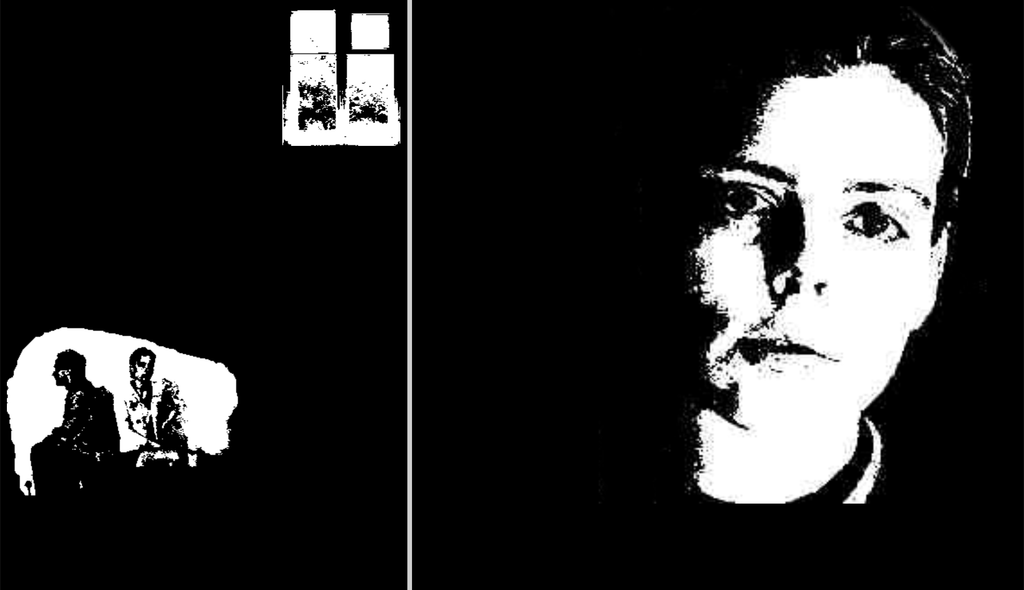
http://www.teleportacia.org/war/
This should be familiar to anyone who has worked with video art. A work experienced on a monumental projection in a darkened room is not encountered in quite the same way when it appears in a small window embedded in a webpage. Even if the underlying file is unchanged, its scale, duration, visibility and relationship with the surrounding environment have been transformed.
Consider a video installation that depends on the viewer entering a room at an arbitrary moment, discovering that the work is already unfolding and deciding how long to remain. Moving that video to an online player with a progress bar, pause button and automatic recommendations changes the encounter.
These controls are not necessarily harmful. Some may provide useful freedoms that the original installation lacked.
But they are not neutral.
We could understand the experience as an assemblage, to borrow the concept developed by Gilles Deleuze and Félix Guattari. The artwork, the spectator, the space, the technical apparatus, the surrounding institutions and the habits of reception enter into relationships through which the experience takes shape.
This does not mean that the artwork is reducible to its surroundings. Nor does it mean that every circumstance has equal importance. It suggests something more modest and perhaps more useful: aesthetic experience is not produced by an isolated object acting upon an isolated mind.
It happens somewhere, through something, under particular conditions.
And those conditions can themselves become material for artistic thought.
An artist may deliberately use interruptions, notifications or fragmented viewing as part of a work. A networked installation might depend on distant participants, unpredictable connections or changes occurring in real time. An artwork might exist only through relationships between people who never share the same physical space.
In such cases, the network is not merely distributing the work. It is participating in its existence.
Here, the traditional distinction between a work and its presentation begins to become difficult to maintain.
The digital pharmakon
For Stiegler, technology has a fundamentally pharmacological character, an idea he developed partly through Derrida’s reading of the Greek pharmakon, something that may act as either remedy or poison.
A technology can diminish human capacities while also providing the means to develop them. Writing may weaken certain forms of memory while making other forms of knowledge possible. Digital media can encourage compulsive consumption, but they can also support new ways of learning, creating and collaborating.
The question is not whether we should accept or reject technology as such. It is how we organise our relationships with it, and which possibilities we choose to cultivate.
This seems particularly important for contemporary art.
If the experience of art depends partly on its conditions of presentation, then digital environments should be understood as artistic and curatorial problems in their own right. Their interfaces, temporal structures, possibilities for interaction and methods of connecting participants all deserve critical attention.
Perhaps the challenge is not to build a virtual replica of the museum, with white walls rendered in three dimensions and paintings hanging politely upon them. Nor is it necessarily to remove every interruption and reproduce the solemnity of the gallery on a computer screen.
Why assume that the museum’s familiar spatial conventions should become the default grammar of online art?
Networked environments can do things physical galleries cannot. They can connect geographically distant people within a shared artistic situation. They can sustain works that change over days, weeks or years. They can make collective activity part of an artwork’s unfolding. They can create relationships between places, bodies, texts and images that have no direct equivalent in the architecture of a conventional exhibition.
But these possibilities do not emerge automatically because we upload artworks to the internet.
They require artistic invention, technical choices and a willingness to treat the environment itself as something more than a delivery mechanism.
Nor should every artwork be required to exploit these possibilities. A poem does not become a lesser poem because it remains a poem on a screen. A film does not have to become interactive, and a painting does not need to become an immersive experience to justify its digital existence.
There is room for works that simply ask to be encountered.
The question is whether our digital environments are capable of respecting that request.
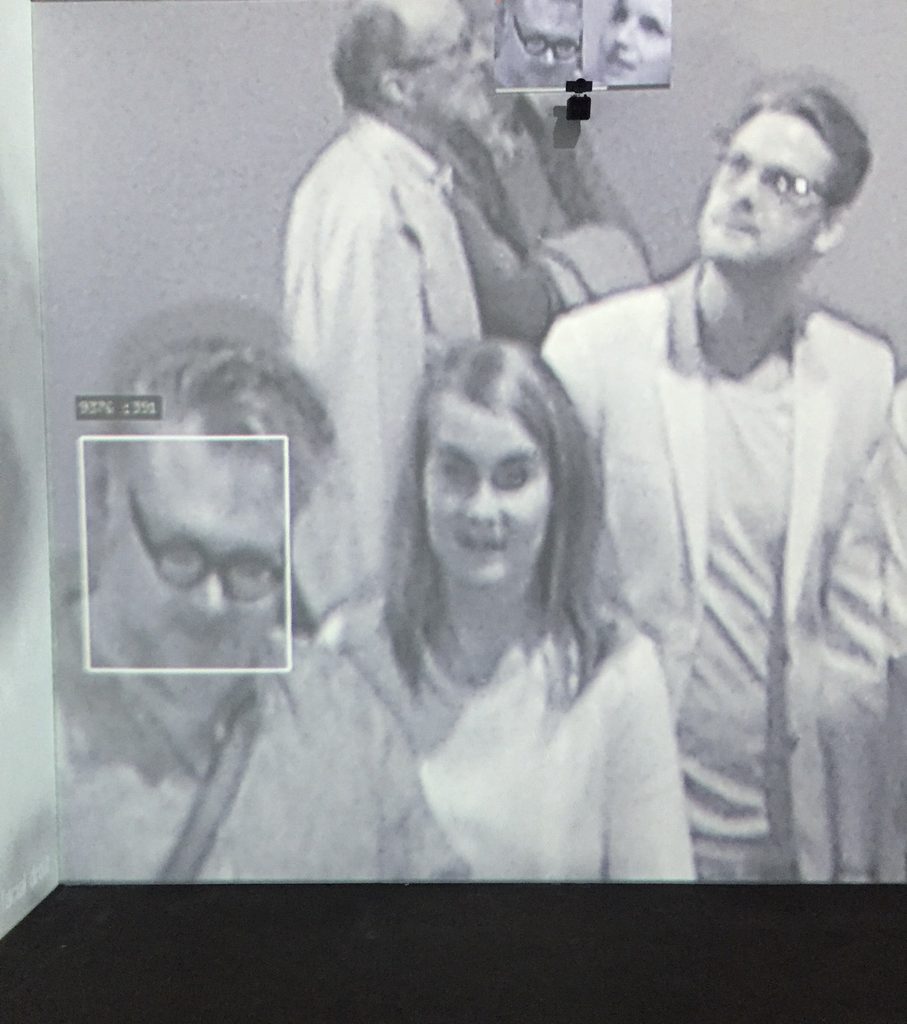
Photo: Ville Kiiski
Something worth staying for
I have occasionally wondered what Stiegler actually said that morning in Compiègne. Perhaps somewhere, among old papers and conference notes, there is a programme or a few pages that would restore the details of his lecture. I remember enough to know that his thinking made an impression. The rest of the morning survives through fragments: the cardboard coffee cups, the unexpectedly forgiving timetable and Stiegler chatting casually with his acquaintances before taking the stage.
Other encounters with art have remained with me in different ways. The strange atmosphere of November, the awkward presentation of Lovely Andrea, the experience of standing through a film because leaving simply did not occur to me. In both cases, the circumstances were far from ideal, yet the works commanded my attention.
Stiegler’s own life presents a far more extreme and troubling example of the relationship between experience and its conditions. Imprisonment deprived him of fundamental freedoms, yet within those circumstances he developed the intellectual discipline that transformed his life. This is hardly an argument for confinement. But it reminds us that the relationship between our surroundings and what we make of them is neither simple nor predictable.
Perhaps aesthetic experience is similarly resistant to prediction. The space, the technology and the circumstances of an encounter all matter, but they do not determine everything that happens. Sometimes an artwork creates its own conditions of attention, even when its surroundings seem determined to prevent it.
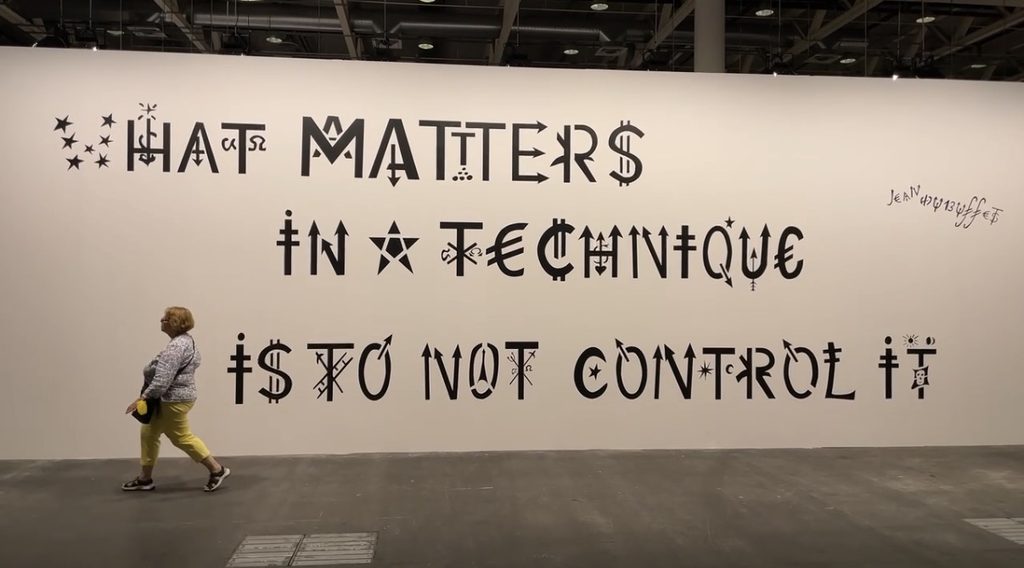
Photo: Ville Kiiski
We have learned to make art available almost everywhere, while building digital environments that constantly invite us to move on to something else. Yet there is nothing inevitable about these arrangements. The same technologies that fragment our attention can also open unfamiliar worlds, sustain new relationships and create experiences that would otherwise be impossible.
Perhaps the challenge is not to reproduce the museum’s silence on our screens, but to discover what other conditions might allow art to happen. Some of those conditions may be carefully designed. Others may emerge unexpectedly from the relationships between works, technologies and the people encountering them.
Not everything meaningful needs to become content. And not everything we encounter needs to lead us somewhere else.
References and further reading
- Bernard Stiegler, Symbolic Misery, Volumes 1 and 2. On aesthetic experience, cultural industries and the industrial organisation of sensibility.
- Bernard Stiegler, Taking Care of Youth and the Generations (English edition, 2010). On attention, education and the formation of subjectivity.
- Bernard Stiegler, Acting Out (English translation, 2009; originally Passer à l’acte, 2003). Stiegler’s autobiographical account of his imprisonment and philosophical development.
- Bernard Stiegler, “Retourner le confinement en liberté de faire une expérience,” Le Monde, April 2020. A personal reflection on imprisonment, discipline and the experience of confinement.
- Brian O’Doherty, Inside the White Cube: The Ideology of the Gallery Space (1986). On the construction of the modern gallery.
- Walter Benjamin, The Work of Art in the Age of Its Technological Reproducibility (1935–1936). On aura, mass reproduction and modes of reception.
- Boris Groys, Art Power (2008), particularly “Art in the Age of Digitalization.”
- Gilles Deleuze and Félix Guattari, A Thousand Plateaus: Capitalism and Schizophrenia (1980/1987).
- Bernard Suits, The Grasshopper: Games, Life and Utopia (1978). On games, rules and their voluntarily accepted constraints.
- Paola Antonelli and Paul Galloway, “When Video Games Came to the Museum”, MoMA.
- Hito Steyerl, November (2004). Artist’s documentation and synopsis.
- Manifesta, Manifesta 5: Hito Steyerl. Exhibition documentation.
- Documenta 12, Lovely Andrea (2007). Exhibition documentation.
- Thomas Elsaesser, “Hito Steyerl: Lovely Andrea”. On the presentation of the work at Documenta 12.
Leave a Reply