Assemblage, the invention of social practices and why the future of social media may depend on what its designers cannot predict.
SUNDAY ESSAYS #02 — 1 November 2026
What if the most important possibilities of a social network are the ones its designers never imagined?

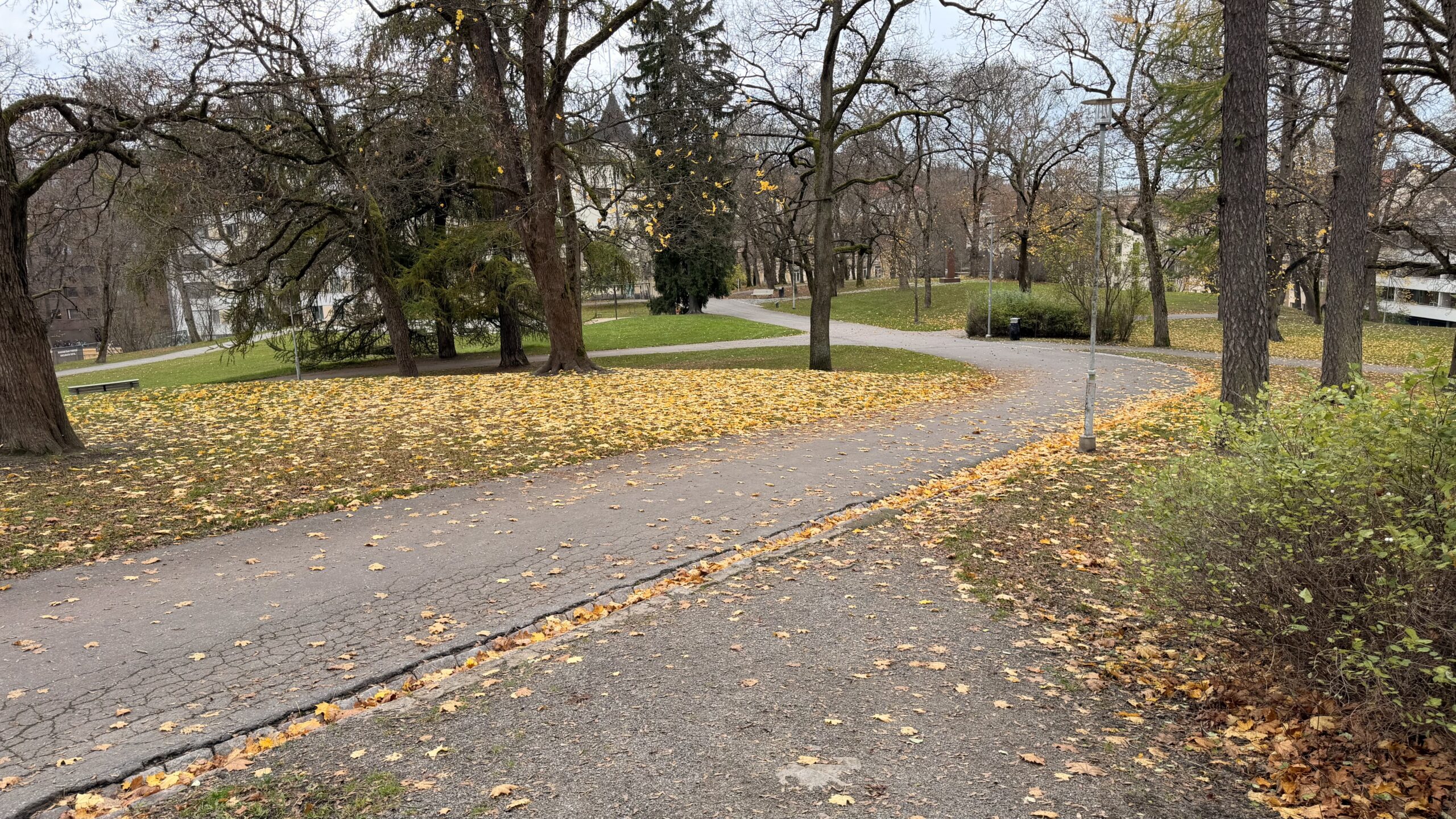
Photograph: Ville Kiiski, November 2026.
Text and editorial direction: Ville Kiiski
Research, writing and fact-checking: ChatGPT
The things we didn’t know we were building
In August 2007, Chris Messina suggested that people on Twitter might use the hash symbol to organise conversations around particular subjects. The idea was not entirely new. Internet Relay Chat had long used the # symbol to identify discussion channels, and similar conventions had already appeared in services such as Jaiku. Messina proposed adapting these familiar practices to Twitter’s emerging environment of short public messages. Users began experimenting with the convention, and the platform eventually incorporated it into its architecture. What began as the adaptation of an existing social practice became one of the defining conventions of online communication.
Something similar had happened with the @-reply. Early Twitter users began placing the @ symbol before another user’s name to direct messages towards particular people. Retweeting, too, developed through informal copying and attribution practices before becoming a built-in function. These conventions now seem so natural that it is easy to forget they were not all part of the original product design. Some of the most consequential features of social media were invented by people using the systems, rather than by the companies building them.
There is an important distinction here. Technology companies design software, but they do not independently design the social practices that emerge around it. They provide certain possibilities, impose certain limitations and establish incentives, while people bring their own histories, habits, needs and imaginations. The resulting environment is neither simply a product nor simply a community. It is something produced through their interaction.
This is where an idea from twentieth-century philosophy becomes unusually useful for thinking about twenty-first-century technology.
Assemblage: not what something is, but what it does
The French philosophers Gilles Deleuze and Félix Guattari developed the concept of agencement, commonly translated into English as assemblage. The translation is useful but imperfect. In ordinary English, an assemblage may suggest a collection of objects arranged together, as in a sculpture constructed from found materials. Agencement places greater emphasis on the process of arranging, on connections, capacities and the way different elements come to function together.
An assemblage brings heterogeneous things into relation: people, machines, institutions, languages, spaces, regulations, gestures, habits and desires. These elements do not need to share an origin or an identity. What matters is that their relationships produce possibilities and effects that cannot be explained adequately by considering each component in isolation. A city, for example, is not merely buildings, streets and inhabitants. It is also traffic conventions, property relations, public services, commercial practices, memories, expectations and countless patterns of movement that make those material elements function as a city.
The same applies to social media. Instagram is not simply an application for sharing pictures and videos. It is a particular arrangement of cameras, smartphones, visual conventions, advertising markets, professional aspirations, recommendation systems, social hierarchies, cultural tastes and everyday behaviour. Influencer culture cannot be understood through the application alone, any more than the application can be understood independently of the people and industries that use it.
This perspective changes the questions we ask. Instead of asking only what a platform contains, we can ask what kinds of relationships it makes possible, which behaviours it encourages, what forms of value it produces and who gains the power to organise those relationships. We can also ask what might happen if some of its familiar elements were rearranged.
The important point is that an assemblage is not necessarily stable. It holds together through habits, conventions, technical decisions and institutions, but its parts can enter into new relationships. The same components may acquire entirely different capacities in a different arrangement.
How the feed became natural
Think about the social media feed. It is now such a familiar interface that we tend to treat it as an obvious way of organising digital social life. Messages, pictures, news, advertisements and recommendations arrive in a vertical sequence. We scroll, react, occasionally participate and continue. Different platforms implement this differently, but the basic form has become remarkably persistent.
Yet there is nothing inevitable about the feed. It is a historically successful arrangement of interface conventions, technical infrastructure, business incentives and user behaviour. Chronological streams offered one way of handling rapidly growing amounts of material. Recommendation systems introduced other possibilities for selection and ordering. Advertising models made measurable attention increasingly valuable, while mobile interfaces made continuous scrolling convenient. Each development reinforced some behaviours and discouraged others.
Over time, the arrangement became familiar enough to feel natural. Users learned how to perform within it. Publishers adapted their content. Creators adjusted their practices to platform incentives, while advertisers developed increasingly sophisticated ways of purchasing access to audiences. The interface was no longer merely a way of viewing social activity. It had become part of the machinery through which social activity was organised, evaluated and monetised.
From an assemblage perspective, the feed is therefore not simply a piece of software that could be switched off without consequences. It is connected to livelihoods, expectations, cultural forms and entire industries. Removing a recommendation algorithm might alter an important relationship within that system, but it would not automatically dissolve the habits, economic dependencies or institutions that have grown around it.
This distinction matters because criticisms of contemporary social media often confuse a particular mechanism with the larger system to which it belongs. Replacing an algorithm with a chronological list can be an important intervention. But it does not by itself answer the more ambitious question of what social networks could become.
The freedom we traded for convenience
The early internet, and later the World Wide Web, developed around architectures that made relatively few assumptions about what people would eventually do with them. Anyone with the necessary resources and knowledge could establish a website, create links to other sites or develop entirely new services without asking a single platform operator for permission. These systems provided common protocols rather than a predetermined social experience. Their openness made possible an extraordinary diversity of experiments, but it also left much of the work of discovering, navigating and organising information to their users.
This was never a world of unlimited freedom. Access to the early internet was uneven, technical competence mattered enormously and the infrastructure was shaped by institutions, commercial interests and forms of governance from the beginning. Even the World Wide Web depended on deliberate decisions about standards and intellectual property. When CERN released foundational Web software into the public domain in April 1993, it helped establish the conditions under which others could develop and distribute their own implementations. Openness was not the absence of structure. It was, to a significant extent, the result of choosing structures that others could build upon.
Social networking platforms offered something different. They made participation easier by reducing the number of decisions people had to make. Instead of creating a website or navigating between separate communities, users could establish a profile, find their friends and begin communicating within a familiar environment. The platform supplied identities, social conventions, communication tools and increasingly the mechanisms of discovery. By limiting the range of possible interactions, it made a particular kind of social interaction dramatically more accessible.
There is a paradox here. The relative freedom of the open web did not automatically translate into an equally accessible social experience. Conversely, the restrictions imposed by social platforms made participation easier for millions of people. Some of those constraints were genuinely useful. The problem was not that social environments acquired structure, but that their structures increasingly became inseparable from private ownership, commercial incentives and unilateral control.
In this sense, social media did not simply replace the open internet. It reorganised parts of it into more specialised and tightly governed environments. The benefits were real, as were the losses. The challenge now is not to return to an imagined past of unlimited freedom, but to ask whether we can preserve the accessibility of social platforms without accepting the concentration of power that came with them.
This suggests that freedom in digital environments needs to be understood in more than one dimension. There is the freedom to participate: to join conversations and communities without needing specialised knowledge or disproportionate resources. There is the freedom to explore: to discover ideas, people and relationships without having every path predetermined by the interests of an intermediary. And there is the freedom to transform: to participate in changing the practices, structures and rules of the environment itself.
These freedoms are related, but they are not interchangeable. A platform can be extraordinarily easy to use while giving its participants little influence over how it operates. It can offer seemingly endless content and still restrict the paths through which that content is discovered. It can allow people to create communities while retaining exclusive authority over the conditions under which those communities exist.
The deeper question is therefore not how to remove constraints, but how to design constraints that expand people’s capacities, including their capacity to reshape the environment in which they participate.
Lines of flight and the invention of new practices
Deleuze and Guattari describe processes through which established arrangements become loosened or disrupted using the term deterritorialisation. The related notion of a line of flight describes a movement through which an existing arrangement opens towards other possibilities. These are not simply metaphors for escape or freedom. They concern changes in relationships, capacities and the organisation of a system. A line of flight is not necessarily an escape towards something better; it may also produce new dependencies and forms of control.
Early Twitter offers an accessible, if imperfect, illustration. By reducing public expression to short messages, it loosened some conventions of blogging, including the assumption that a public contribution needed the length or structure of a conventional post. Users responded by discovering new possibilities in this compressed form. Public conversations, rapidly spreading observations, collective reporting, hashtags and informal conventions of attribution developed through experimentation.
The system did not remain an open field of improvisation. Successful practices became recognisable conventions and eventually formal features. The hashtag acquired technical functionality. Retweeting became a standardised operation. Forms of collective communication that had emerged from users’ experiments were incorporated into the platform and its commercial infrastructure.
This is the other side of the process: reterritorialisation. New relationships stabilise. Rules, conventions and institutions form around them. What was once improvised becomes expected, and what was once an unexpected use can become a mechanism of measurement, competition or control.
There is no simple opposition between good deterritorialisation and bad reterritorialisation. Without some stability, collective practices cannot reliably persist. A language that changed its grammar completely every morning would make communication difficult. Communities need recognisable conventions, and useful technical innovations often become more valuable when they are dependable. The problem begins when a successful arrangement becomes so dominant that alternative relationships are difficult to imagine or establish.
The relationship between design and improvisation is visible outside digital technology as well. Urban planners sometimes encounter desire paths: informal routes gradually worn into grass by people walking where an official path does not exist. These paths reveal something about how a planned environment actually functions. They may expose an inconvenient route, an overlooked destination or a pattern of movement that was not anticipated. They do not automatically prove that every official path was badly designed. But they demonstrate that the people inhabiting an environment continually produce knowledge about its possibilities and limitations through their actions.

Photograph and intervention: Ville Kiiski, November 2026.
Social technologies have their own desire paths. Users improvise ways around limitations, combine features for unintended purposes and establish conventions that designers never anticipated. Some of these experiments disappear. Others become integral to the environment. The question is whether a system can learn from such practices without automatically converting them into new mechanisms of centralised control.
When collective invention becomes private infrastructure
When people invent new social practices, they may also create considerable economic value. A convention that makes communication easier can attract participants, strengthen networks and generate forms of activity around which entire businesses eventually develop.
The hashtag illustrates this process particularly well. It began as a user-proposed convention for organising conversations. As people adopted it, the convention became part of the infrastructure of public communication, enabling communities, events and social movements to coordinate their activities. Its usefulness also made it valuable to marketers, publishers and the platform itself. A practice developed and popularised through collective participation became part of a privately operated commercial environment.
It would be misleading to describe this simply as the theft of an idea. Platforms invest in technical systems, make conventions accessible to wider audiences and maintain services on which people depend. Their contributions can be substantial. The problem is more structural: the people who collectively establish a practice may have little authority over the infrastructure through which that practice becomes socially and economically important.
A platform may begin by enabling people to invent new social practices. It may end by owning the infrastructure through which those practices remain possible.
Much of the power of contemporary digital platforms comes from the difference between creating value and controlling the conditions under which value can be created. Users do not merely supply content to digital environments. Through their relationships and experiments, they participate in producing the environments themselves. Yet when those practices become essential to communities or livelihoods, their participants may have little influence over how access is governed or how the resulting economic value is distributed.
The difference between an interface and a social environment
Most digital products are designed around anticipated use cases. A team identifies a problem, defines a target audience, develops features and attempts to make their use as intuitive as possible. This is sensible engineering practice. But social environments present a special difficulty: their most important uses may emerge only when people begin doing things nobody originally expected.
A public square is not valuable solely because its architect anticipated every event that might take place there. People may organise a demonstration, stage a performance, meet friends, establish a market, celebrate a victory or simply spend an afternoon doing nothing in particular. The square can support these different activities because it does not prescribe every interaction in advance. It is shaped by laws, ownership, physical design, social conventions and power relations, but its possible uses exceed any single plan.
A digital social environment could be approached in a similar spirit. Instead of assuming that every meaningful activity must fit into a predetermined sequence of posting, consuming and reacting, its designers could ask how to make different kinds of connection possible. What if people could organise themselves temporarily around an event, a question, a shared project or an emerging cultural practice? What if content could be encountered through changing relationships of meaning, context and participation rather than primarily through a single stream?
Such possibilities do not eliminate the need for interfaces. On the contrary, they require carefully designed ways of navigating complexity. Freedom without intelligibility is not particularly useful. An environment offering unlimited connections but no comprehensible means of finding one’s way through them may become less empowering than a conventional feed.
This suggests an important distinction between designing experiences and designing conditions. A designed experience attempts to determine what the user will encounter and how they will proceed. Designing conditions means establishing the capabilities, boundaries and resources within which people can develop activities of their own. Neither approach can completely exclude the other, but their priorities differ.
The second approach treats users not only as consumers of an environment, or even as producers of content within it, but as potential inventors of its social practices. Yet this should not become an argument for endless experimentation at the expense of continuity. Most people do not want to redesign their social environment every morning. Communities need dependable conventions, and trust depends partly on structures that do not change arbitrarily. A useful social architecture must be stable enough to support meaningful relationships while remaining open to new ways of organising them.
The problem of power
There is a danger in turning assemblage into a fashionable metaphor for openness and creativity. Assemblages are not necessarily democratic, benign or emancipatory. Hierarchies, surveillance systems and exploitative markets are assemblages too. Relationships can generate domination just as readily as they generate cooperation.
Assemblage theory does not tell us that more flexible social systems are automatically better. It helps us understand how arrangements form, function and change. Deciding which freedoms should be protected, how benefits should be distributed and what responsibilities institutions should accept requires additional political and ethical commitments. Those choices cannot be derived from a philosophical vocabulary alone.
This raises a difficult question for any company hoping to build a more open social environment, including Semant. If a new platform is commercially successful, what prevents it from gradually consolidating the same powers it was intended to challenge?
Good intentions are insufficient. An interface that encourages exploration can still be embedded in an economic arrangement that rewards the concentration of power. Nor can designers simply abandon control. Social environments require moderation, dependable rules and boundaries when people’s freedoms conflict. The challenge is to establish forms of governance in which necessary authority does not automatically become arbitrary power.
Which decisions must remain with the operator, which can be influenced by participants and which rights should not depend on the operator’s continuing generosity? Can people preserve their relationships when they leave? Can communities shape the environments they inhabit? Can creators maintain meaningful control over their work? These are institutional questions, not merely interface-design problems.
A platform that invites collective invention while reserving exclusive authority over its consequences risks reproducing the very power structures it hoped to replace.
Building for what we cannot predict
Assemblage thinking offers neither a technical blueprint nor a guarantee of emancipation. Its usefulness lies in reminding us that existing arrangements are neither natural nor permanent. The feed is not the inevitable form of social life online, and today’s relationships between users, audiences, creators and platforms need not define its future.
The history of the internet suggests that the real choice is not between freedom and structure. Open protocols required deliberate design, while the accessibility of social platforms depended partly on useful restrictions. What matters is whether those arrangements allow people not only to participate, but also to explore possibilities and influence how their environments develop.
The central design challenge may therefore be less about imagining every future use of social technology than about establishing conditions under which unfamiliar uses can emerge. That requires technical flexibility, comprehensible navigation and reliable conventions. It also requires limits on arbitrary power, because people cannot meaningfully shape an environment if their creations and relationships remain entirely subject to decisions they cannot influence.
Applications come and go. The cultural formations people develop through them can be harder to understand, more difficult to control and considerably more interesting.
The best social infrastructure may not be the one whose designers know every use. It may be the one where people keep inventing new ones.
References and further reading
- Gilles Deleuze and Félix Guattari (1980/1987). A Thousand Plateaus: Capitalism and Schizophrenia. Assemblages, territories, deterritorialisation and lines of flight.
- Manuel DeLanda (2006). A New Philosophy of Society: Assemblage Theory and Social Complexity.
- J. Macgregor Wise. “Assemblage,” in Gilles Deleuze. Cambridge University Press. On the meaning and translation of agencement.
- Chris Messina (2017). “The Hashtag Is 10!”. A first-person account of the 2007 proposal and its subsequent development.
- Carnegie Mellon University (2014). “#OriginStory”. The origins of the hashtag and its connection to Internet Relay Chat.
- Twitter (2009). “The Replies Kerfuffle”. On the development of user-created communication practices.
- Twitter (2009). “Project Retweet: Phase One”. Twitter’s account of how retweeting emerged among users before becoming a built-in feature.
- CERN. “Licensing the Web”. The public-domain release of foundational World Wide Web software on 30 April 1993.
- CERN. “A Short History of the Web”. The early development of the World Wide Web.
Leave a Reply