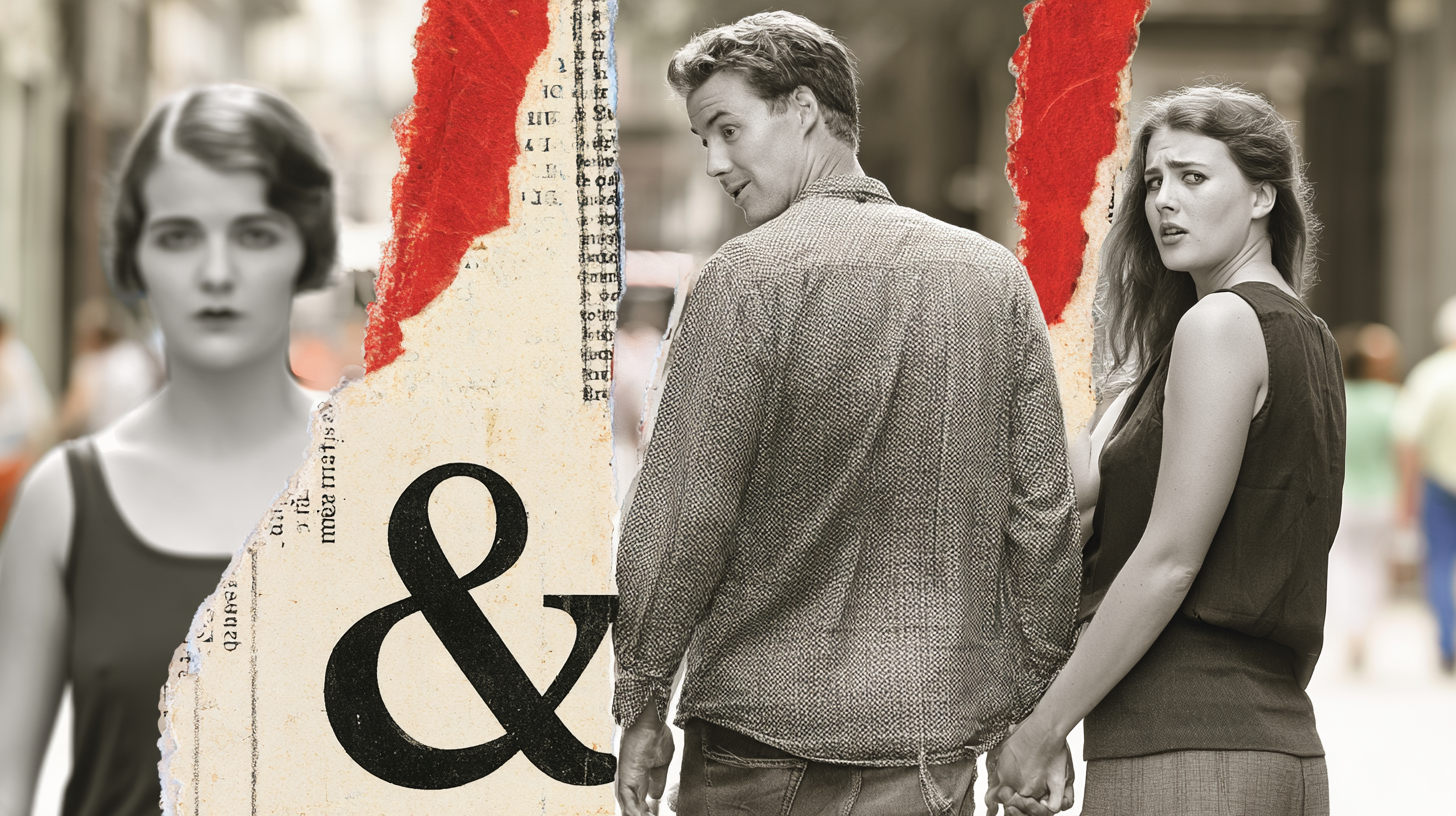
Part 1/7 from the essay series “Slang of Content Nerds to Art and Back”
Hannah Höch’s scissors and the meme maker’s copy-paste are technically very similar gestures, but the comparison between Dada and memes is at its most interesting exactly where it tears. Dada was negation with a target, whereas memes churn like folklore, with no shared goal and no one in charge. The opening part of the essay series arrives at an uncomfortable conclusion: Dada did not lose — on the contrary, it won so thoroughly that it has dissolved into an inseparable part of contemporary culture, and especially of its transgressive practices. It seems that the boundary of art is not, in the end, drawn by comparing memes to so-called serious art, but by assessing the manner of making and the degree of self-awareness.
I. Two collages, a hundred years apart
Hannah Höch‘s photomontage from 1919 and the Grumpy Cat image macro of 2012 are, technically, the same gesture: a rearrangement of ready-made visual material that produces new meanings by colliding contexts. Both the Dadaist photomontage and this millennium’s meme travelled through fast, unofficial channels — Dada pamphlets and cabarets then, feeds now. Both were born of a crisis atmosphere in which official culture had lost its credibility. In the early twentieth century the crisis was the First World War, which the Dadaists held to be the fault of a narrow-minded petit-bourgeois sensibility. They wanted to break free of any art that might have helped bring that catastrophe about. Art therefore had to tear loose from the old and become “a slap in the face of bourgeois taste.” The terrain of meme culture, in turn, is the legitimacy crisis of platform capitalism and its institutions. The kinship is obvious, which is why the comparison between Dada and memes recurs so often.
The parallel is not merely metaphorical. Meme culture has its own well-established practice in which at least two elements are combined into what is almost an Eisensteinian montage. Typically the earliest memes especially had a template into which elements from different sources — characters, frames, textual structures — were quite literally cut and pasted. The new meaning arose precisely from the viewer recognising (or sometimes precisely not recognising) the original contexts as simultaneously present.
Meme generators were ready-made tools for producing such mashups effortlessly (“meme chains,” “template crossover”). Meme scholars treat this expressly as meme culture’s mechanism of evolution: new memes tend to arise as crossbreeds of existing ones. Here Höch’s scissors and the contemporary meme-tinkerer’s copy-paste are no longer merely two instances of the same logic. They are the same physical gesture transposed onto another material.
Beneath the surface, though, the comparison begins to crack — and it is these splitting seams that are the most interesting. They force the question of what, in the end, separates art from everyday visual language at all. The avant-garde of the early twentieth century wanted to destroy that distinction, but seen from the present day, does the whole matter carry any meaning any longer?
II. Negation needs its object, or it is not negation
Dada was programmatic. Tzara wrote manifestos, Zürich’s Cabaret Voltaire was a deliberate intervention, and Duchamp’s urinal was aimed at the art institution. It was a vulgar argument — not fine art, and heaven forbid, certainly not a décor accent. Dada’s absurdity was strategic: it needed the concept of art, the museum, the salon and the critic in order to attack them. Negation is always in relation to its object. In this sense Dada was a profoundly art-historical movement even as it pronounced art dead.
The meme attacks nothing, at least not programmatically. It knows nothing of the art institution and cares nothing for it; it has no manifesto, no author, no programme. The meme is closer to folklore than to the avant-garde. Memes are anonymous and iterative. They live in their variants, like proverbs, catchphrases or mocking songs. When a catchphrase wears out in use, no one asks whether the tradition of art lost something. The meme is visual slang: fast, economical, a community-internal code whose primary function is communication and belonging, not form or the problematising of meaning.
This difference — programmatic negation versus aimless circulation — is the very heart of the comparison.
III. A victory that looked a great deal like dissolution
The stated aim of Dada, and of the avant-garde that followed it, was to dismantle the boundary between art and life. If meme culture is “merely” everyday visual language without the status of art, this does not prove that Dada’s legacy has vanished. Rather, it would seem to mean that Dada’s programme has been realised better than expected. The meme landscape is what the world looks like once the boundary between art and life has fallen, or at least grown indistinct. The structural fate of the avant-garde is that its success looks like disappearance: once art dissolves into the everyday, the result is no longer called art. Suspicion toward the artistic status of memes is therefore, at one and the same time, both justified and proof of the opposite.
The same pattern has recurred many times in other transgressive movements. The Situationists‘ détournement — the hijacking of existing imagery and turning it against itself — is in practice a theoretical description of the meme’s operating principle, decades before the internet. Debord himself, however, warned already in his own time of recuperation: the spectacle absorbs the subversive gesture and sells it back as style. Meme culture is, in a way, détournement and recuperation happening simultaneously in real time. The hijacking and the resale take place in the same feed, often within the same day.
Punk’s DIY ethic, for instance, ran the same arc. Three chords and a photocopied fanzine were at first an assault on the music industry, until they became a genre and finally a style category in a clothing shop. Fluxus, in turn, abandoned the artwork altogether in favour of the event and the instruction. Its event-score tradition — art as a text in the imperative that anyone can carry out — is structurally closer to the meme format than any painting.
In all of these examples the same three phases recur. First transgression, then diffusion, and finally archiving. The question, then, is not whether memes are the heirs of Dada, but at which stage of this arc any given phenomenon stands.
At the beginning of 2026 meme culture produced the purest possible example of this arc. For the first time it generated something structurally resembling a manifesto. The so-called Great Meme Reset was a campaign that began on TikTok and demanded that memes be reset, on 1 January 2026, back to their 2016 state. The intent was to steer meme culture away from “brainrot” and AI-generated content. The Great Meme Reset had all the hallmarks of an avant-garde movement: a stated programme, a named enemy, a utopia and even a deadline.
The decisive difference from Dada, however, was that the movement lacked an institution to oppose. It took meme culture itself as its adversary. It was a form of negation without an actual object — an avant-garde with no direction of progress. And it failed exactly as this chapter’s thesis predicts, but at an unprecedented speed. The reset did not restore the old memes; it became a meme itself within a few days. The recuperation that took punk a decade and the Situationists a few years took, this time, about ten days. The traditional three-phase arc from transgression through diffusion to archiving has now shrunk to the length of a single news week.
The matter is not, however, quite so simple that we could set about nostalgically bemoaning the loss of meaning. The Great Meme Reset’s assumption was — rather uncharacteristically conservative for these circles — that brainrot is nothing but empty noise. The linguist Adam Aleksic has pointed out, on the contrary, that brainrot memes were precisely a commentary on their own time, and strongly on the pulse of it at that. Some were early parody of AI, just as AI was becoming a culturally significant phenomenon, and some appear to satirise the very act of making memes. What looked to some like emptiness may well have been a dialectical response to the present moment. Perhaps the formats of the 2010s simply do not fit the questions of the 2020s. In other words, the “meaningfulness” the reset demanded was a yearning for the style of meaningfulness. This is an important reminder: the impression of emptiness is often the limit of the viewer’s literacy, and rather more rarely a property of the work. The same observation applies to Dada’s sound poetry and to the deliberate layering of meanings, of which more in the next part.
IV. What if the line of art is drawn between the manner of making and awareness of it
Where, then, does the boundary run between art and semi-automatic replication? I propose that it is not drawn between two categories, meme and art, but between the manner of making and the awareness of it — as in language. Most speech is the semi-automatic circulation of set phrases, yet poetry can arise from the very same material the moment the speaker begins consciously to work the form, to stretch it, to turn it against itself. Everyday speech and slang become poetry through the degree of awareness — not through vocabulary, and not necessarily even through style.
The same principle can be fitted to memes. The bulk of meme production is the mechanical filling-in of templates. It is visual small talk, whose value is more social than aesthetic. But at the edges there are regions where the format has begun to be used against itself. Surrealist memes and deep-fried aesthetics deliberately dismantle the meme’s legibility: the image is compressed until it disintegrates, the structure of the joke is pushed to the point where the punchline vanishes and only the ruin of the form is left. This comes very close to the act by which Dada broke language down into sound poetry. Hugo Ball‘s “gadji beri bimba” and a deep-fried meme emptied of its meaning are two executions of the same gesture. When the meme-maker begins to problematise the conditions of their own medium, the manner of making becomes conscious. At that point the use of the word “art” starts once again to be more relevant — not because the institution grants it, but because a meta-level has arisen as the consequence of an artistic intention.
Interestingly, the boundary is permeable in both directions. The institution has already begun to absorb meme aesthetics into itself: so-called biennial art borrows post-internet imagery, and at the same time anonymous meme-makers do form-conscious work with no art context whatsoever. Duchamp’s readymade claimed that the artist’s conscious choice makes an artwork of any object at all. Meme culture asks the follow-up question: what happens when the choosing is done by an internet’s worth of anonymous makers and an algorithm selects the most visible among them? The gesture of curation has dispersed so widely that it can no longer be traced back to any single intention.
V. Two species of aimlessness
Dada performed aimlessness aimfully. Its chance was composed chance, its nonsense was an argument. The aimlessness of meme culture is genuine: it performs nothing, it merely circulates. This makes it both less and more than Dada. Less, because it lacks the cutting edge of critique and the awareness of form. More, because it has achieved what Dada only demanded: the means of art have dissolved into everyday communication so completely that no one notices them any longer.
Perhaps the most honest formulation is this: memes are not art, and that is precisely their art-historical significance. They are the terrain the avant-garde’s detonations left behind. And here and there in that terrain someone stops, looks at the ruins consciously, and begins to build. In that moment, and only in that moment, everyday chatter begins to turn into art again.
It must be remembered, however, that from that point of self-awareness onward the assessment and critique of the quality and content of art is only just beginning. Contemporary art too lapses on occasion into a superficial adulation of novelties and passing fashions, but the system has so far had an excellent capacity to recalibrate itself. We await with interest what power of testimony and creation memes do or do not possess within the context of contemporary art.
- Ville Kiiski
The next essay in our series sets the multilayered meaning-structures of memes against the double-speech of twentieth-century political resistance art.
Leave a Reply