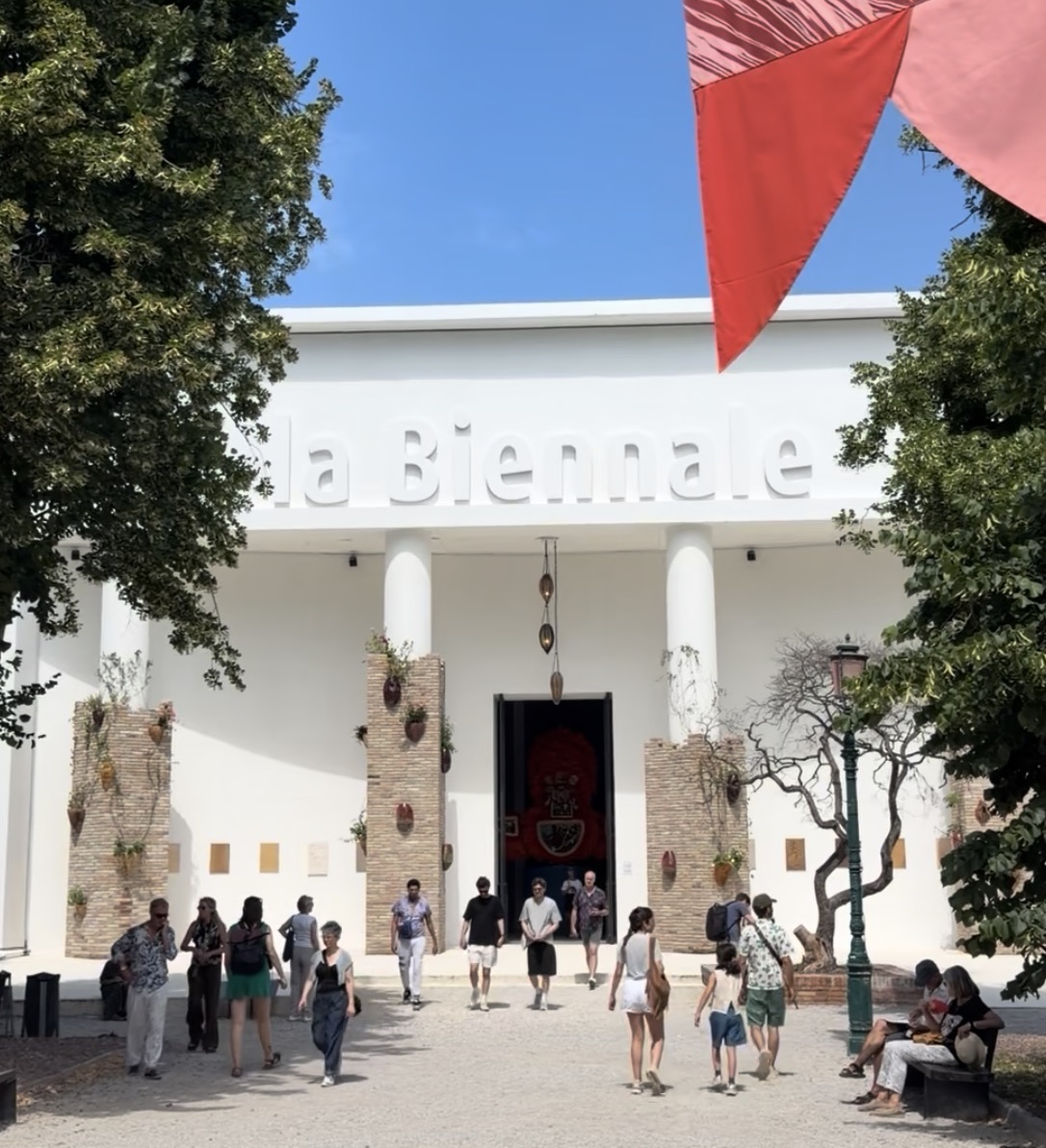
The 61st Venice Art Biennale closed today. It came to an end in a world where fundamental concepts of truth, reality and human creativity are being reconsidered. Meanwhile, contemporary art’s own institutions are struggling with political conflicts, economic pressures and crises of credibility. To me, this surprisingly successful Biennale raises an intriguing question: what if contemporary art’s real problem is not its diminishing significance, but the enormous growth of its potential significance?
Text and editorial direction: Ville Kiiski
Research, writing and fact-checking: ChatGPT
1. A Most Unfortunate Series of Events
The Venice Biennale is, in many respects, an ideal place to examine the contradictions of contemporary art. Its history alone offers an impressive assortment of colonialism, nationalism, political propaganda and cultural power. Founded in 1895, the event adopted a system of national pavilions in the early twentieth century, presenting the world’s art through the framework of nation-states and their international standing. By a remarkable coincidence, the first countries to secure space were precisely those with geopolitical influence and the resources to construct permanent exhibition buildings. The world’s cultural diversity thus acquired a physical form reflecting the power relations of the era.
Under Italy’s Fascist regime, the Biennale became a state-controlled institution in 1930, with responsibilities that included international cultural diplomacy and nationalist ambitions. The event expanded into new cultural fields, most famously with the establishment of the Venice Film Festival in 1932. Venice is therefore a historically fascinating reminder that cultural achievements and the political morality of the systems producing them do not always go hand in hand.
The events of 2026 have done little to dispel this legacy.
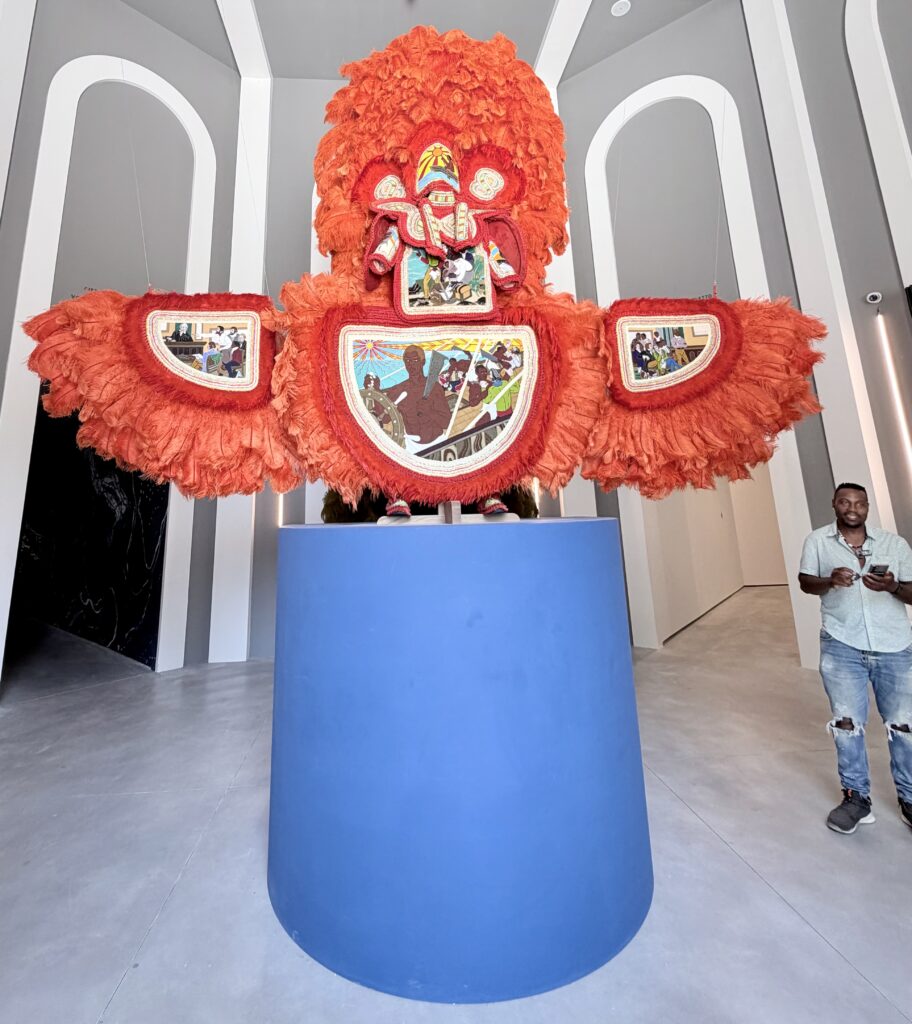
The first great tragedy occurred in May 2025, when Koyo Kouoh, the Cameroonian-Swiss curator appointed artistic director of the Biennale, died suddenly. She was the first African woman to be selected for the position. Kouoh had already made substantial progress in preparing her exhibition, and the Biennale’s organisers and her closest collaborators decided to realise it according to her plans. The result was an exceptional situation: one of the world’s most influential art events would be constructed around the vision of a curator who had died while much of the project was still very much a work in progress.
Meanwhile, the national pavilions developed dramas of their own. In Australia, artist Khaled Sabsabi and curator Michael Dagostino were selected to represent the country in February 2025, only for Creative Australia to reverse the decision a few days later. The reversal followed a public and political controversy surrounding works Sabsabi had created nearly twenty years earlier. The decision prompted strong protests across the art world, and following an independent review, the pair were reinstated in July. Sabsabi ultimately appeared both in the Australian Pavilion and in Kouoh’s international exhibition.
As the 2026 opening approached, Russia’s return to the national presentations and Israel’s participation also provoked protests. The conflicts escalated around the awards system, and the international awards jury resigned in late April. In place of the traditional jury prizes, the organisers resorted, disgracefully in my view, to a public vote. The Golden Lions, among the art world’s most prestigious distinctions, were not awarded in the usual manner this time. Instead, they were replaced by the publicly voted Visitors’ Lions. Several national organisers, including Frame, which was responsible for the Finnish Pavilion, had announced their withdrawal from the competition. Apparently, however, not all withdrawing participants were even removed from the voting lists.
As the Biennale closes, the voting results are still awaited, and nobody seems quite sure exactly when they are supposed to be announced. It remains to be seen whether we will get the predictably dull outcome or witness something resembling the Eurovision Song Contest: a tragicomedy of politically charged public voting, potentially complete with organised voting campaigns and allegations of manipulation. At least the business of awarding prizes for contemporary art has successfully been turned into a new kind of spectacle.
It is difficult to imagine a sequence of events offering a more comprehensive introduction to the contradictions of the international contemporary art system. Political representation, freedom of expression, national identity, cultural autonomy, institutional responsibility and artistic independence have collided in ways that no individual curator could possibly have planned. In situations like these, it is also important to remember that not all conflicts can be reduced to equivalent differences of opinion. Questions of war, censorship, state responsibility and cultural representation are different problems, even when they emerge within the same institution.
Oriol Vilanova: Los restos (2026).
An installation of approximately 50,000 vintage postcards
covers the walls of the Spanish Pavilion, transforming
the exhibition space into an immense visual archive.
Collected from flea markets over more than two decades,
the postcards form a new constellation of memories,
forgotten images and the histories of everyday objects.
Spanish national pavilion, Venice Biennale 2026.
Video: Ville Kiiski.
There is something inherently tragicomic about Venice’s national pavilions. The event aspires to demonstrate art’s ability to transcend borders, yet its most recognisable institutional structure is built around the borders between nation-states. While the artworks address internationalism, diversity and freedom of thought, an endless debate continues around them over who has the right to represent which nation, group or experience.
It would be easy to conclude that the entire system has outlived its usefulness.
Except that there are more biennials than ever before. According to Germany’s Institut für Auslandsbeziehungen, more than 300 are now held around the world. In Venice, too, attendance has increased over the longer term: the 2022 Art Biennale sold a record 800,000 tickets, while the 2024 exhibition sold approximately 700,000, still considerably more than the pre-pandemic edition of 2019.
Why is this happening? Is it a reflection of art’s growing significance, tourism marketing, competition between cities, the pursuit of cultural capital or the international art world’s own machinery? Probably all of the above. In that case, however, it would be worth examining what this machinery can actually produce at its best.
The biennial format certainly does not appear to be dying from a lack of public interest. And there I was, too: on a personal level, this year’s Venice also managed to surprise me.
2. E pur si muove
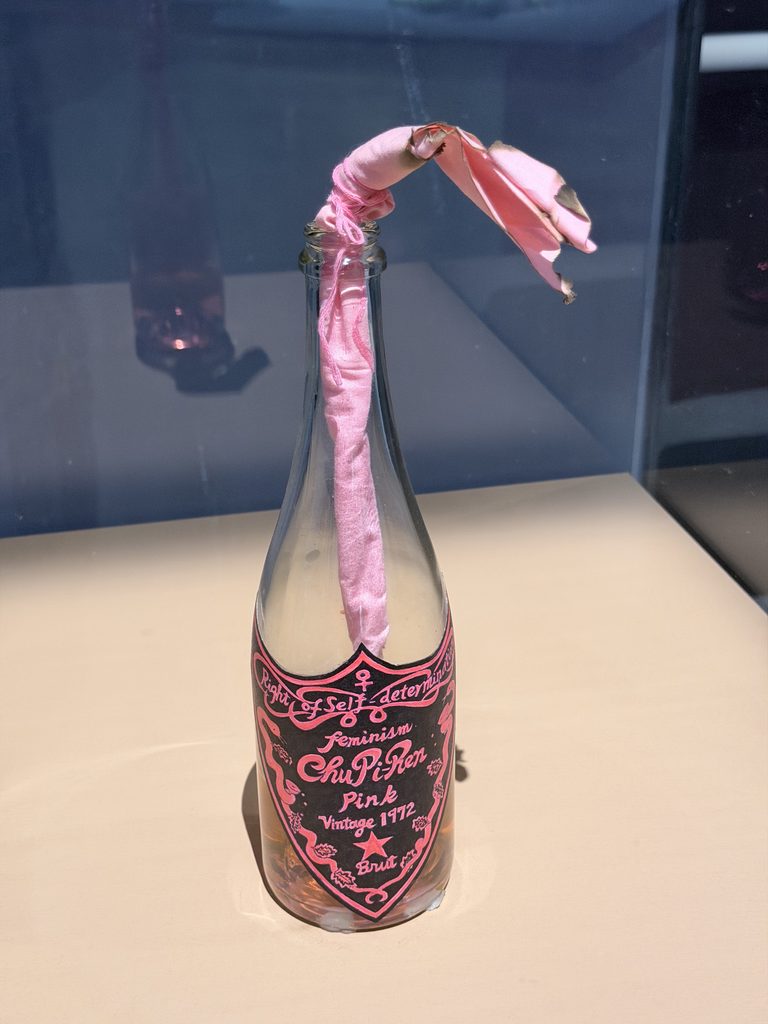
After several editions that I had personally found rather unsatisfying, the 2026 Venice Biennale felt unexpectedly alive. Not perfect, nor even particularly coherent, but interesting in a way I had already begun to miss. The exhibition offered a remarkable variety of perspectives, questions, forms of expression and possibilities for thought. Not everything even seemed particularly determined to obey the curatorial theme, which I experienced as a certain freshness.
Koyo Kouoh’s choice of title, In Minor Keys, was itself noteworthy. At a time when almost every public debate seems to compete for attention by increasing its volume, the exhibition took quieter registers as its starting point: smaller narratives, listening, connections and the continuation of life amid crises and catastrophes.
Kouoh was not suggesting that the world’s problems should be forgotten or that art ought to withdraw from politics. Rather, she seemed to be searching for ways of engaging with the world beyond a permanent state of emergency, confrontation and moral mobilisation. Visitors were invited to slow down, listen and encounter experiences that did not necessarily offer loud, obvious or immediate answers. In many works, regardless of their physical scale, I sensed a kind of intimate, diary-like personal quality. Could a respect for the artist’s individual voice be one of the keys to the heart of this particular Biennale?
A good example of personal experience and an individual voice becoming intertwined with broader themes can be found in the work of Nigerian artist Marcia Kure, who currently works between Nigeria and the United States. Her art connects lived experience with the relationships between the global economy and the natural world.
Kure has also worked in Amazon fulfilment centres, where employees’ movements are closely directed, measured and optimised. She began to see warehouse floor markings, the traces left by forklifts and the routes of goods as a vast drawing, its lines extending into global distribution networks.
Her Roadkill sculptures, meanwhile, originated in encounters with animals killed by vehicles during her commutes. Made from synthetic hair and moving gently in the air currents, the sculptures bring together the organic and the artificial, vulnerability and industrial infrastructure.
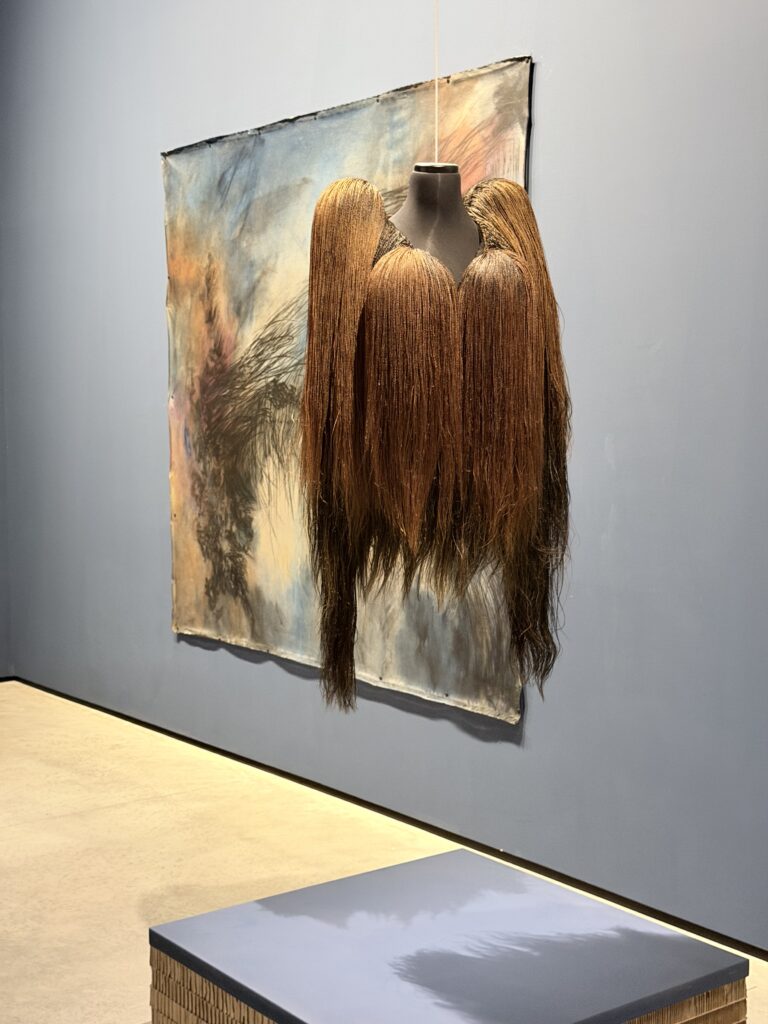
What makes Kure’s practice particularly interesting is that she does not approach these systems merely as an outside critic, but as someone who has lived and worked within them. Personal experience grows into something much broader without the works having to become social manifestos.
On the other hand, the exhibition’s sheer volume seems to have caused some visitors considerable distress. I know perfectly well from experience what biennial overload feels like, although I did not suffer from it this time. I am not claiming that the exhibition was never excessive or overcrowded, but perhaps I have simply developed enough practice to withstand the sensory onslaught. Of course, my ticket allowed me to come and go freely, so I did not have to swallow the Arsenale and Giardini in two marathon days, as visitors with standard tickets essentially have to do.
Before the exhibition opened, many expected a grand parade of the Global South’s best-known artists. Kouoh had, after all, built a distinguished career in African and international contemporary art, and her appointment led many to anticipate a strong geographical and identity-political emphasis.
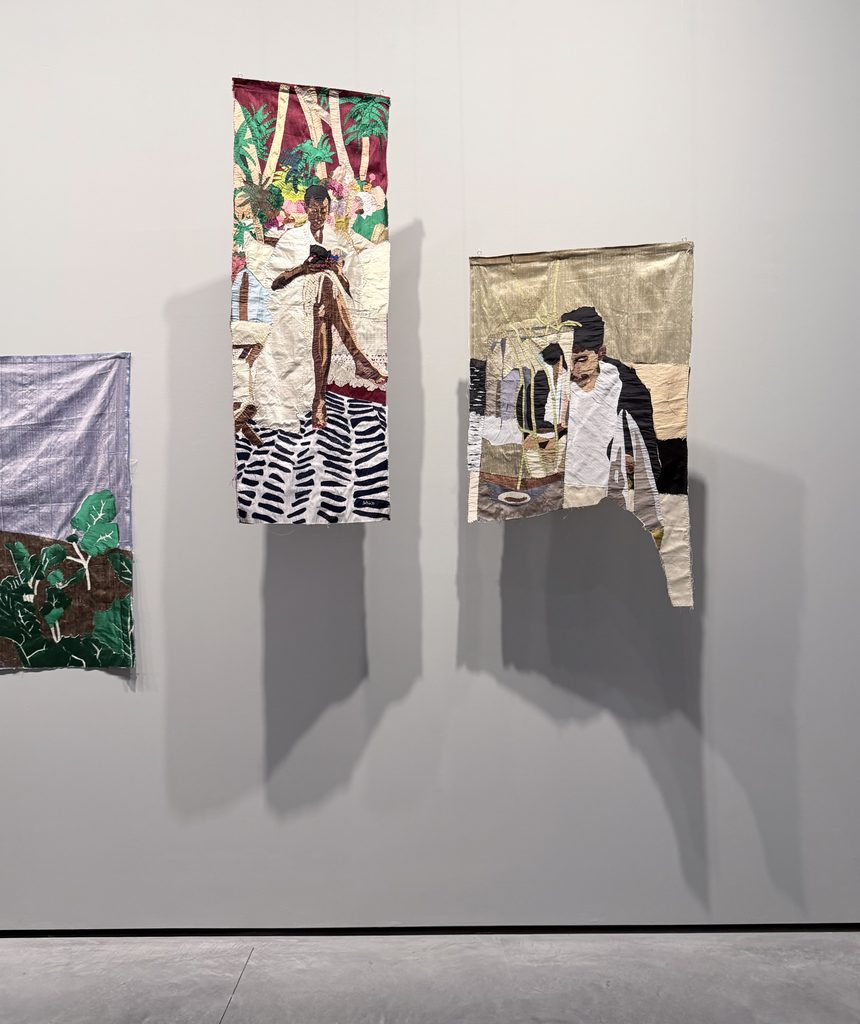
The reality was more interesting. The exhibition’s 110 participants included individual artists, duos, collectives and artist-led organisations. There were internationally established names, but also numerous artists who did not belong to the familiar constellation of global art-world stars. The selections were not organised solely around nationality, origins or international recognition, but also around artistic relationships developed over Kouoh’s career, affinities and sometimes unexpected connections.
To me, the exhibition appeared as a polyphonic chorus from the Southern Hemisphere, but also from a much wider world. Its participants seemed to be addressing matters that genuinely mattered to them, rather than having been assembled to illustrate a single grand political or historical narrative.
This does not mean that questions of identity, colonialism or social conflict have lost their importance. On the contrary, for many artists they remain an immediate and concrete reality. But there is hardly a shortage of their examination in contemporary art. It was refreshing to encounter an exhibition in which the range of meaningful questions seemed broader than the culture wars raging around them.
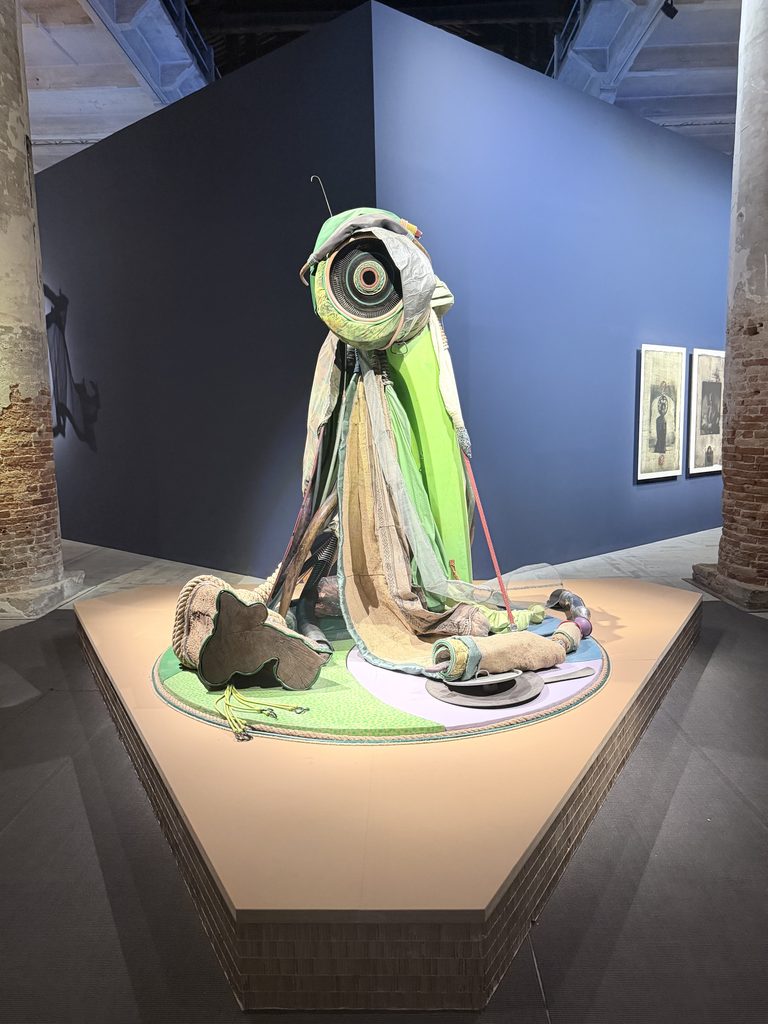
Perhaps the most striking quality was the relative absence of lazy, condescending nihilism. In art, as in the rest of culture, it is easy to adopt an attitude in which everything has already been seen, all values are relative and ultimately nothing matters. In Minor Keys seemed to proceed from a different attitude. The world may be violent, unjust and chaotic, but that does not make human experiences or the questions arising from them meaningless.
International criticism has been surprisingly divided.
Writing in ArtReview, Jenny Wu described the exhibition as recognisable, even somewhat worn-out international biennial art: thoroughly researched, politically responsible and aesthetically appealing, yet diplomatic and harmless. In her assessment, this kind of art resembles a cultural compromise from an earlier era of globalisation, in which political protest is transformed into a subtle exhibition language without concrete demands.
Ben Luke, meanwhile, gave the artworks a higher rating than the overall curatorial presentation in The Art Newspaper. He argued that Kouoh’s central ideas were identifiable, but that the placement of works and the occasionally cacophonous character of the exhibition risked drowning out precisely the quieter expressions it was supposed to foreground.
These are reasonable arguments. The exhibition’s exceptional circumstances may well have left parts of it unfinished, or prevented some of its most subtle curatorial ambitions from being fully realised. Nor should Kouoh’s death turn her into a mythical figure whose artistic decisions must be accepted without criticism.
But Wu’s review raises a more difficult question. Why should political art constantly be expected to produce stronger confrontations, more concrete demands or more visible resistance? Can art not be socially significant when it opens up new interpretations rather than endlessly digging through age-old disputes? I am almost tempted to suggest that perhaps art is at its most revolutionary when it addresses its audience on a personal level.
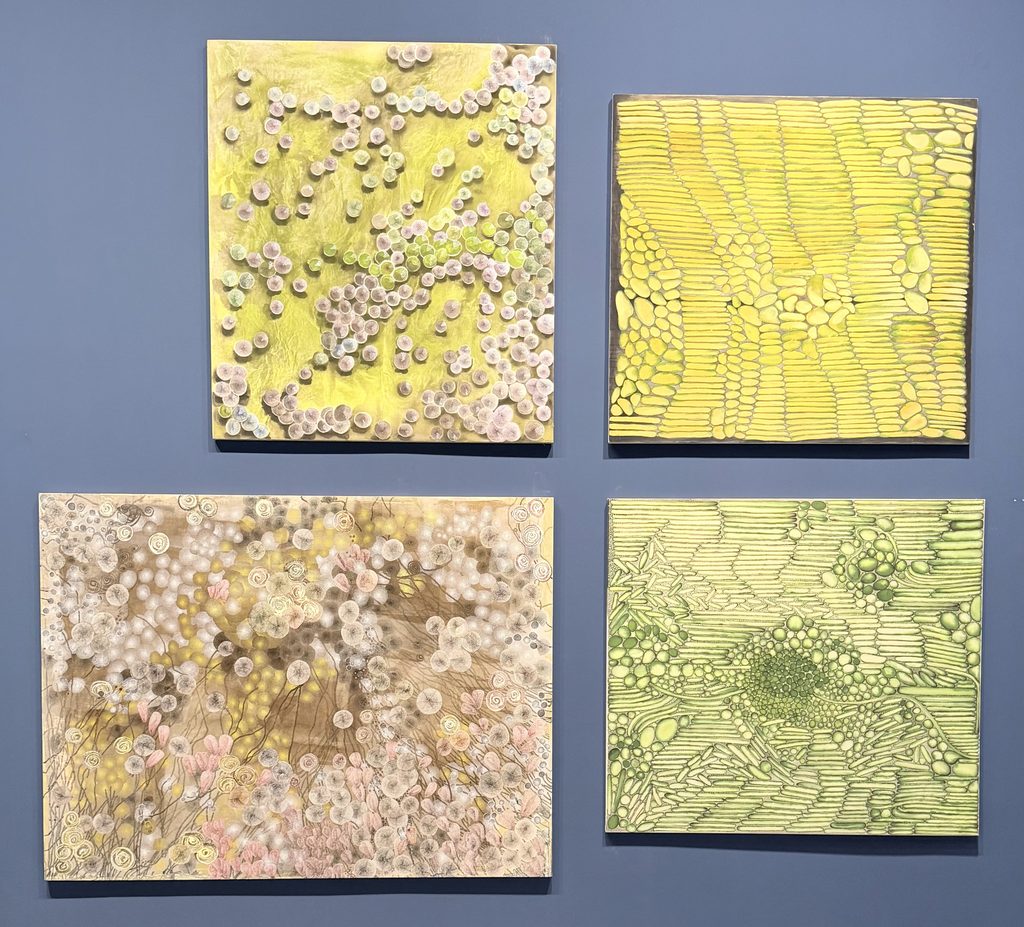
It is also possible that international contemporary art criticism has developed its own peculiar compulsion towards novelty. Every major exhibition is apparently expected to redefine the direction of art. If it cannot, or simply does not wish to, produce something radically new, it can easily be accused of repeating familiar practices.
But new is not the same as good. And an already recognisable form of expression has not necessarily lost its capacity to generate new experiences.
The art summer of four years ago offers an interesting personal comparison. In 2022, the lumbung approach of documenta fifteen in Kassel, emphasising community and resource sharing, felt artistically restrictive to me in many respects. Community can be important and meaningful, but its virtue an sich does not automatically make art built around it interesting.
That same year, Cecilia Alemani’s The Milk of Dreams in Venice brought a different kind of disappointment. Something about its emphasis on historical layers, Surrealist traditions and reinterpretations of art history tasted suspiciously like a style of recapitulation.
The problems were therefore almost opposites. In one exhibition, the demand for social usefulness seemed to dominate artistic activity; in the other, historical artistic forms and their aestheticised rearrangement began to feel like ends in themselves. Both, of course, contained significant individual works, and neither exhibition was without legitimate ambitions.
Yet what remained strongest from the summer of 2022 was a sense of astonishment. Experiencing these almost polar opposites alongside one another demonstrated just how vast, contradictory and tolerant of radically different approaches the field of contemporary art really is. It can accommodate almost opposing ways of understanding the world, humanity and the purpose of art. The exhibitions themselves may not have pleased me, but the machinery of contemporary art certainly impressed me. E pur si muove, and yet it moves.
In Venice 2026, at least echoes of that same sense of breadth seemed to emerge within a single exhibition.
Perhaps that is why In Minor Keys felt so refreshing. Not because it had discovered some new universal truth about the world, but because it did not seem to demand one, either from its artists or from itself. The atmosphere did not feel lazy or fearful. It felt genuinely polyphonic.
First Impressions of the 2026 Venice Biennale.
The author reflects on the exhibition shortly after
beginning his visit.
Spoken in Finnish, with English subtitles.
Video: Ville Kiiski.
3. The State of Contemporary Art
There is something curiously inward-looking about the debate surrounding the state of contemporary art. Much of the attention is focused on the art market, institutional power, funding, international visibility and who gets to define the boundaries of good or meaningful art.
These are not trivial questions. Artists’ livelihoods, the distribution of public funding and the concentration of cultural power have a substantial effect on what kind of art can be created and seen in the first place. Biennials, too, are part of this system. They generate visibility and prestige that may later be converted into economic value.
But if we discuss the state of contemporary art primarily through its own economic system, something essential may be overlooked. The health of the art market is not the same as the vitality of art. Still less is it the same as art’s significance for individuals and society.
Right now, this distinction may be more important than it has been for a long time.
We are living through a historical period in which several fundamental concepts underpinning our understanding of reality are changing simultaneously. Post-truth public discourse has long undermined trust in shared facts, not to mention the actors consciously and forcefully working to erode that trust and social cohesion. Developments in digital image manipulation and generative artificial intelligence are also forcing us to reassess the relationship between images, recordings and actual events.
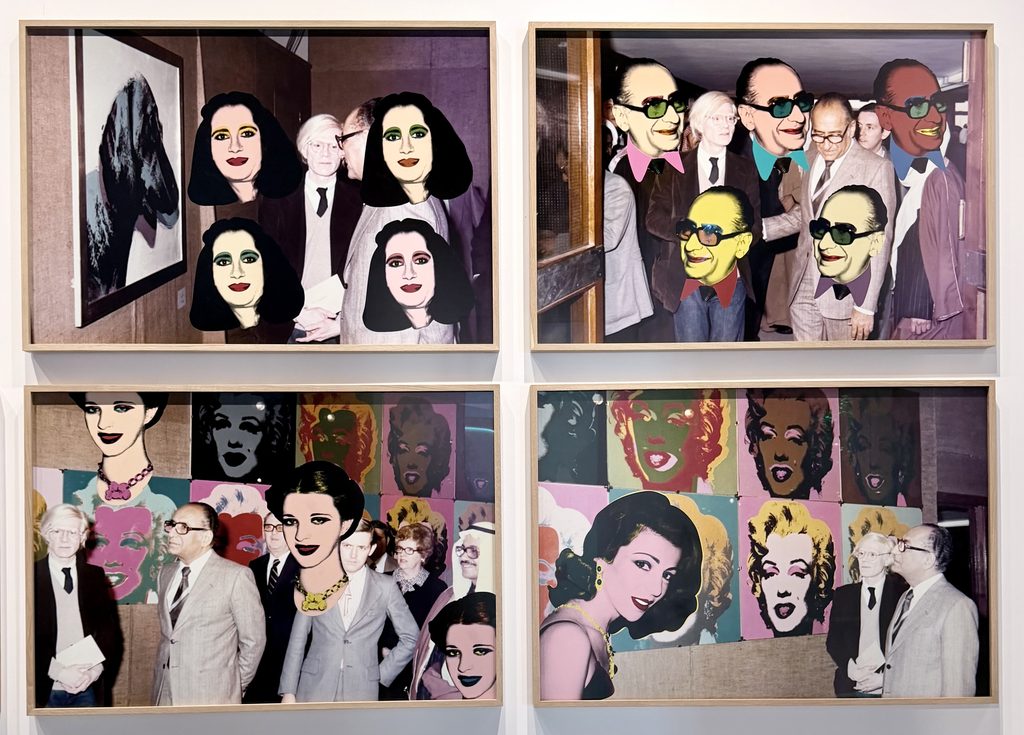
A photograph has never really been perfect evidence of reality. Photographs have been cropped, staged, manipulated and used to mislead almost since the medium’s inception. Yet the idea of indexicality, of an image originating as a physical trace left by the world, has been central to modern visual culture. Today, a realistic image can be produced without any corresponding event or object having existed at all.
This does not mean the complete disappearance of indexicality. But it does represent a fundamental transformation in the age of visual evidence. The evidential value of an image can no longer be inferred from its resemblance to reality.
At the same time, artificial intelligence is changing our understanding of authorship, creation and originality. If machines can produce convincing images, texts, voices and other cultural expressions in almost unlimited quantities, what happens to human creativity? Does originality increasingly become a question of intention, experience and relationships with the surrounding world rather than a technical characteristic?
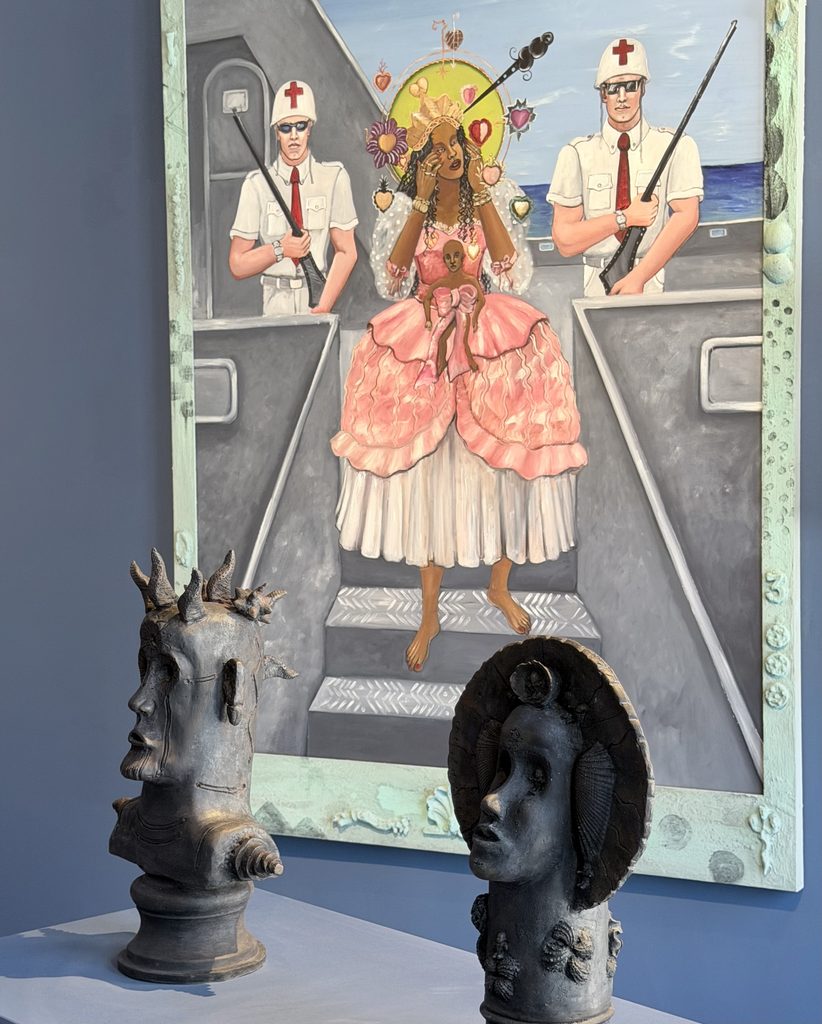
The economy, too, may be undergoing a fundamental transformation. The relationships between work, production and income distribution could change radically if the economic significance of artificial intelligence and automation develops as expected.
At the same time, technological and economic power is becoming concentrated among actors whose ability to control digital infrastructure, the distribution of information and user behaviour exceeds the influence of traditional cultural institutions in many respects.
And we have not even mentioned climate change, biodiversity loss or humanity’s relationship with other forms of life. These crises compel us to reassess our ideas of growth, progress and humanity’s position in the world. They are not merely political or technical problems, but also concern the kinds of futures we are capable of imagining.
What connects all these developments is that they challenge established ways of understanding reality. And this is precisely where contemporary art may have an exceptional contribution to make.
Contemporary art has explored the relationships between contradictory truths, representation, reality and imagination for more than a century. Dada, Surrealism, various branches of modernism, conceptual art and postmodern artistic strategies and practices have each, in their own ways, challenged how the world can be represented and what we should expect from such representations.
It is hardly new to contemporary art that the same subject can give rise to several mutually contradictory yet meaningful interpretations. Nor is it unfamiliar with the idea that an artwork’s meaning cannot be reduced to its creator’s stated intentions.
This does not mean that all claims about reality are equally true. On the contrary, contemporary art’s experiential and conceptual heritage may help us distinguish between the existence of facts and the multiplicity of their interpretations. Art can offer ways of living with uncertainty and contradiction without turning uncertainty into an excuse for indifference.
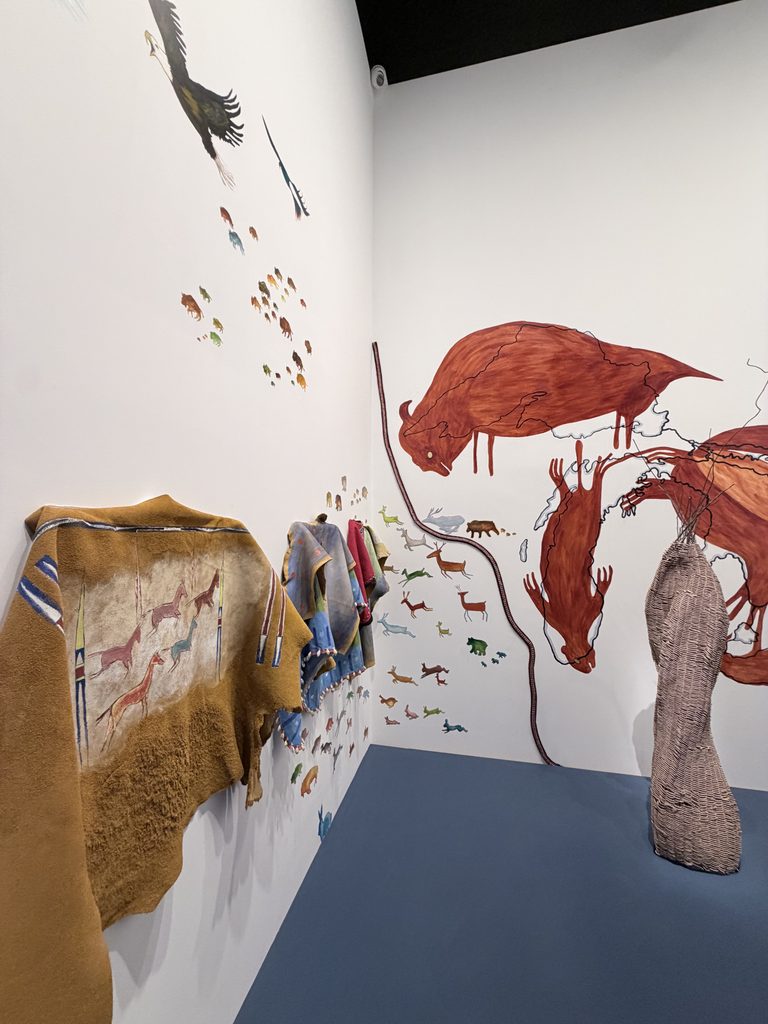
Contemporary art also has something at its disposal that scientific research does not pursue in quite the same way: the possibility of moving between conceptual, emotional, embodied and sensory experience without having to reduce these dimensions to a single explanatory system.
Science requires verifiable claims and methods. Philosophy can examine the limits of concepts and the structures of human experience. Art, meanwhile, can construct situations in which a person experiences something before even knowing how to name what is happening.
This does not make art superior to science or philosophy. It does, however, make it a different kind of instrument.
Contemporary art also benefits from its extraordinary formal freedom. It can employ images, objects, text, sound, moving images, space, technology or social situations. It can combine media or abandon them altogether. It does not have to obey a predetermined genre, nor does it even have to produce a permanent object.
Michael Joo: Noospheres: Expanded
(Organic Growth: Crystal Reef, 2026).
This four-screen LED installation brings together AI,
blockchain technology, coral reef ecology and digital
communities. It draws on a project of more than 10,000
digital crystals and a large Discord community.
Alongside digital forms, the screens also feature material
from online conversations and meme culture.
Joo draws parallels between the continuous evolution
of biological and digital ecosystems.
Venice Biennale 2026. Video: Ville Kiiski.
This freedom is an important asset at a time when the distribution of many other cultural forms is governed by increasingly rigid formats. Literature, of course, remains an equally vital and intellectually rich field, but genre expectations exert considerable pressure within its commercial structures. It is probably no coincidence that even many ambitious novels borrow narrative structures familiar from crime fiction. It is difficult to imagine James Joyce achieving broad visibility in today’s publishing and media environment without his literary experimentation being carefully marketed as an exceptionally unconventional cultural product.
Contemporary art is certainly not free from conventions of its own. At international art fairs and biennials, one can recognise well-established aesthetic formulas just as easily as in commercial literature or cinema.
But one of contemporary art’s central possibilities is its ability to break its own formats repeatedly. It is not bound to any single narrative, material or technological system.
And it has another considerable advantage: visuality.
In an increasingly visual culture, an image can reach someone quickly, sometimes before they have even formed a conscious understanding of its meaning. Yet visual immediacy need not imply simplicity of meaning. An artwork can stop a viewer in their tracks within a second and continue to affect them for years.
This may be one of contemporary art’s most relevant possibilities today. It can employ the instruments of a fast-moving visual culture while refusing that culture’s demands for constant speed and immediate comprehensibility.
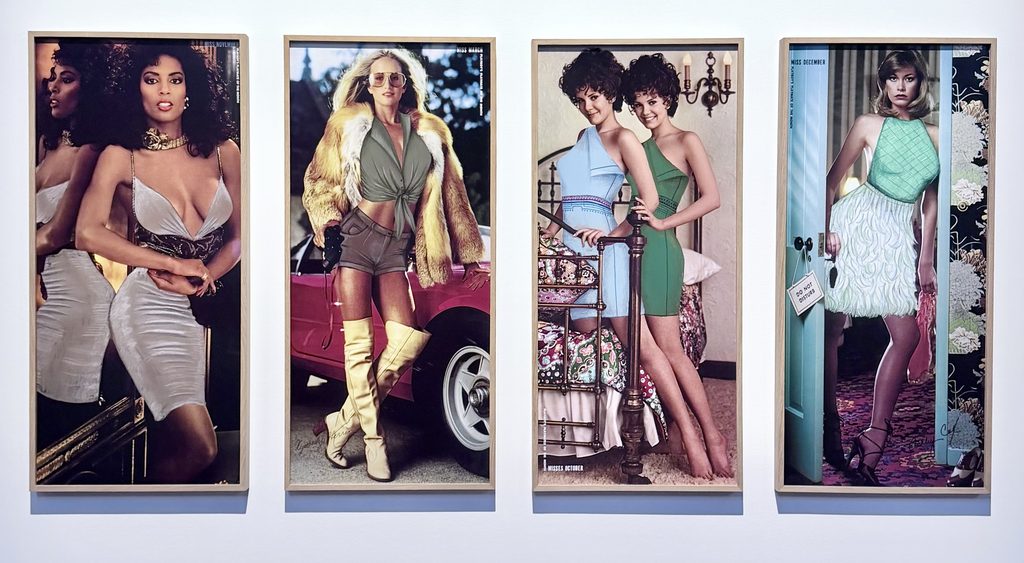
4. Why We Need Contemporary Art More Than Ever
For decades, I have thought of a truly good artwork as a kind of multisensory algorithm of human experience.
The expression may sound suspiciously technical today, especially now that algorithms have become one of the central instruments of power in our time. But I mean something quite different from a predetermined sequence of operations designed to produce a specified result.
I believe that a successful artwork constructs an experiential system capable of generating new meanings when encountered by different people in different historical circumstances. A work does not merely represent something. It contains a structure through which the viewer can think, feel and form new connections.
This may explain why an artwork created a hundred years ago can still feel astonishingly relevant today. Its creator could not possibly have known our world or anticipated its problems. Yet the work may help us address questions that would have been unimaginable at the time of its creation.
Venice 2026 offers a concrete example of this idea. Éric Baudelaire’s five-channel video installation Death Passed My Way and Stuck This Flower in My Mouth is based on Luigi Pirandello’s 1922 play The Man with the Flower in His Mouth. In the play, a terminally ill man has begun to observe the smallest details of everyday life with extraordinary intensity.
Baudelaire relocates this nearly century-old premise to the enormous flower auction in Aalsmeer, the Netherlands, where millions of cut flowers pass through the machinery of automated trading and logistics. Pirandello’s reflections on mortality, the passage of time and the small details of life acquire new meanings in an environment where the brief lives of flowers are subordinated to the precisely organised machinery of the global economy.
The work does more than adapt an old play to a new setting. It demonstrates how a text written almost a century ago can continue generating meanings that its author could scarcely have anticipated.
Éric Baudelaire: Death Passed My Way and Stuck This Flower in My Mouth (2026).
Inspired by Luigi Pirandello’s 1922 play
The Man with the Flower in His Mouth,
this five-channel video installation follows the automated
logistics of the global flower trade in Aalsmeer,
the Netherlands. Pirandello’s reflections on mortality
and the intensity of human experience acquire new meanings
in a world where millions of cut flowers pass through
the machinery of global commerce.
Edited and spatialised by Claire Atherton.
Venice Biennale 2026. Video: Ville Kiiski.
One of the most classic examples is, of course, Marcel Duchamp’s Fountain, presented in 1917. For more than a century, it has been central to debates about the definition of art, originality, authorship and the power of art institutions. The story contains an enormous irony: the original work was rejected from the exhibition and soon disappeared without a trace. Today, we know it mainly through photographs and later replicas authorised by Duchamp. One of art history’s most famous challenges to the concept of originality therefore no longer exists in its original form. In the age of generative AI, the questions it raises about the original creative act, copying and the significance of the artist’s choice acquire entirely new, and rather delicious, dimensions.
Duchamp did not predict artificial intelligence. His work simply emerged in a form that allows new questions to be asked in later historical circumstances.
This is why topicality seems an inadequate criterion for evaluating art. A work may address the most important political issue of its time, be socially necessary and still remain artistically tied to that particular moment. Conversely, a work whose immediate intentions are difficult to define may open up entirely new questions decades or centuries later.
Nor does this imply any dismissal of political art. Picasso’s Guernica remains a powerful example of a work born from a very specific historical and political situation whose significance has never been exhausted by representing that situation.
Perhaps the essential distinction is therefore not between political and apolitical art, or between the topical and the timeless. The question is how much experiential and intellectual substance a work contains beyond what can be exhausted by its immediate purpose.
A good artwork can be deeply committed, but its significance does not end when the viewer understands and accepts the position it presents.
This is also one reason to be sceptical of artworks that seem to have been created primarily to fulfil a prevailing artistic or social tendency. Such works may be skilfully made, politically justified and historically interesting. But if their meaning has been entirely determined in advance, their capacity to generate new interpretations may remain limited.
This is hardly an infallible measure of quality, either. A deliberately unambiguous work can be extraordinarily successful, while a highly open-ended one can be utterly empty. Nevertheless, the distinction helps us ask what artistic quality actually means if it cannot be reduced to novelty, social usefulness or formal virtuosity.
Seen in this light, the purpose of large exhibitions also begins to look different.
Perhaps the most important function of a biennial is not to offer an up-to-date survey of the latest developments in international art. It can also create an environment in which a large number of different experiential systems encounter one another and the viewer. In such a setting, meanings emerge not only from individual works but also from their differences, connections and contradictions. Understood this way, biennials provide opportunities to experience different works side by side, allow them to enter into dialogue and assess their significance in relation to one another, their surroundings and their time.
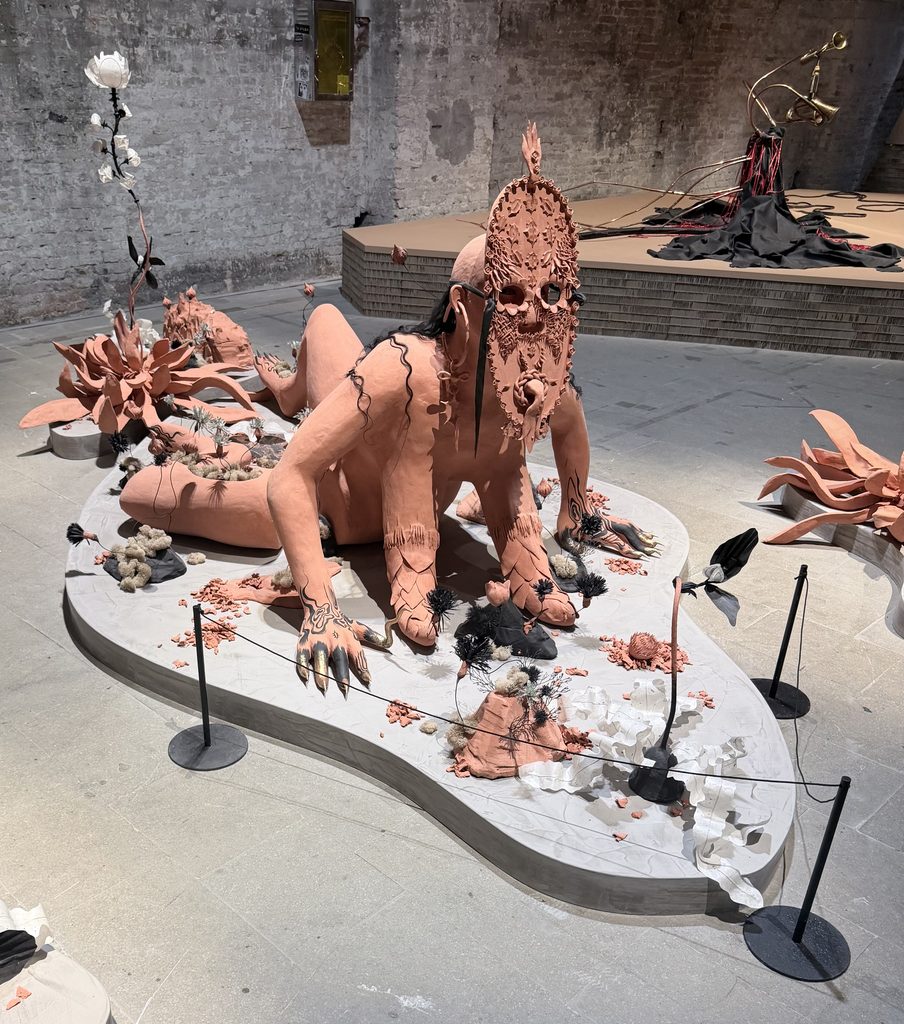
The curator’s task then becomes something considerably more interesting than illustrating a ready-made explanation of the world. A curator can construct a space in which meanings emerge in ways that even they cannot fully anticipate.
It is precisely from this perspective that Koyo Kouoh’s In Minor Keys felt successful to me. It did not seem so much an attempt to prove something about the world as an invitation to encounter many different ways of thinking and living within it. Although the curatorial whole certainly had its shortcomings, its plurality of voices felt exceptionally fertile.
This is not necessarily at odds with the serious problems inherent in biennial institutions. Quite the opposite: if their purpose is to facilitate such encounters, they should also be judged by how successfully they fulfil that purpose.
National pavilions, inequalities in funding, artists’ working conditions, the environmental impact of global travel and the accessibility of exhibitions are all essential questions. They partly determine which encounters can be organised and who can participate in them.
But the debate over who gets to use institutions and for what purposes should not entirely replace the question of what actually happens inside them.
Nor do I believe that contemporary art has any exclusive claim to renewing human thought. Literature, cinema, music, philosophy, journalism and countless other forms of human culture can open up new perspectives on the world. There is no need to set them in competition with one another.
I approach these questions through contemporary art partly because its possibilities seem particularly interesting in this historical moment. But also because, personally, it is one of my favourite ways of engaging with the world.
Kader Attia: Whisper of Traces (2026).
The French-Algerian artist’s labyrinthine installation
combines ritual objects, dried plants, mirror fragments,
ropes, sound and moving images.
Inspired by a Vietnamese shaman’s idea of computer viruses
as spiritual entities resisting humanity’s control of
the digital world, the work connects the near-religious
imagination surrounding AI with older understandings
of spirits and invisible forces.
Venice Biennale 2026. Video: Ville Kiiski.
Biennials offer an excellent excuse to travel, wander around and spend days surrounded by peculiar things. They make possible a luxury towards which modern everyday life occasionally seems rather suspicious: spending hours thinking without an immediate practical objective. One can look, wonder, become bored, grow excited, return to something and discover that one’s thoughts have travelled somewhere entirely different from where they were in the morning.
I am not at all sure that such activity requires any further justification.
But if we genuinely want to assess contemporary art’s significance from a social perspective, there may be something fundamental in this experience. Art does not necessarily change the world by offering solutions to its problems. It can change the people who have to live with those problems.
And now, as our social systems increasingly seek to predict, measure, classify and direct human activity, the opportunity to encounter something unpredictable hardly seems insignificant.
Quite the contrary. We may need it more than ever.
Institutions such as the Venice Biennale may be outdated, contradictory, expensive and politically problematic. They must be open to criticism, and they must be capable of change. But their continued relevance cannot be determined solely by examining their administration, financing or geopolitical structures.
What matters is also what can happen within them, and because of them.
Ebony G. Patterson: …fester… (2023).
The Jamaican artist’s double-sided installation combines
more than a thousand red lace gloves with richly patterned
tapestries, ornaments and botanical forms.
One side resembles a raw, wounded surface; the other,
a lush, almost excessive garden concealing traces
of death beneath its decorative abundance.
Patterson uses the garden as a metaphor for colonial legacies,
consumer culture and the coexistence of destruction
and renewal.
Venice Biennale 2026. Video: Ville Kiiski.
Venice 2026 did not offer a ready-made answer to the state of contemporary art. For me, however, it was a reminder of something easily forgotten amid the constant talk of crisis: contemporary art is not merely a problematic system of institutions and markets. It is a vast, contradictory and constantly evolving field in which people attempt to understand the world in profoundly different ways.
Right now, the world seems to be in desperate need of such attempts.
Perhaps contemporary art’s most important task, then, is not simply to keep up with the times.
Perhaps its task is to help us keep up with the changes of our time, even when we do not yet know what it is that we are actually experiencing.
- Ville Kiiski
Leave a Reply